
March felt turbulent. Stocks pulled back as geopolitical tension intensified and energy prices surged. Beneath the surface, though, markets weren’t unraveling. They were processing new information and repricing risk. In this March 2026 market update, we cover what drove the volatility, where interest rates stand and how diversified portfolios held up in the first quarter.

Key takeaways
- Escalating conflict in the Middle East pushed oil above $100 a barrel and drove a broad pullback in stocks.
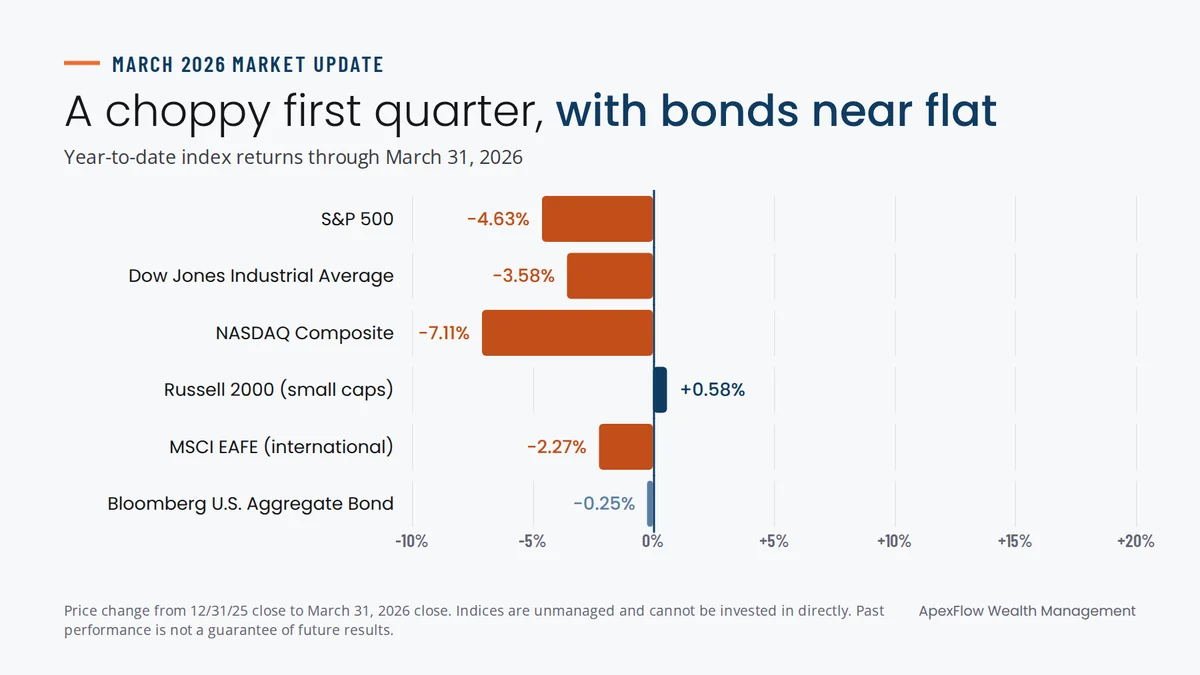
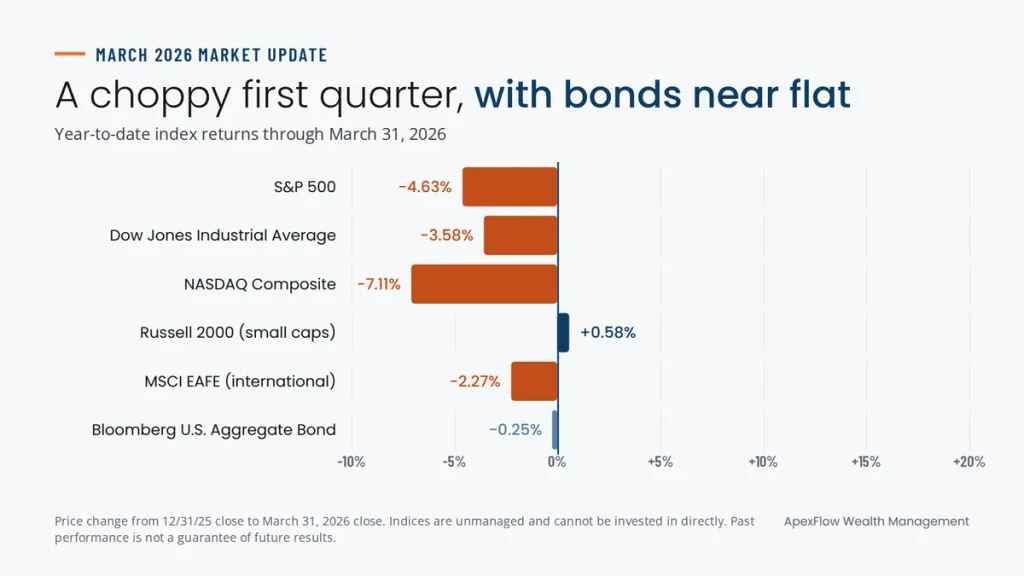
- The S&P 500 ended the first quarter down 4.63%, while small caps edged up 0.58% and bonds were close to flat.
- The Federal Reserve held rates at 3.50% to 3.75% and still expects one cut later in 2026.
- Energy was a standout, and leadership kept rotating beneath the surface.
What drove March’s volatility
Rising inflation pressures. Tensions in the Middle East disrupted global energy supply routes, pushing oil prices sharply higher and reigniting inflation concerns. Markets began reassessing the path of interest rates and how much flexibility the Federal Reserve has.
Geopolitical headlines. Investors responded with a broad risk-off stance, leading to sharp equity pullbacks and higher volatility across global markets. These moves were swift and often driven more by headlines than by underlying data.
Energy as a standout. While most sectors struggled, energy was a notable exception. Higher oil prices supported earnings expectations for energy companies.
Repricing often feels abrupt because asset prices adjust faster than economic data. Historically, volatility driven by geopolitical events tends to be front-loaded. Once the range of outcomes becomes clearer, markets shift their attention back to earnings and long-term growth.
Interest rates: higher for longer requires patience
The Federal Reserve held rates steady at its March meeting, keeping its target range at 3.50% to 3.75% and reaffirming expectations for a single cut later in 2026. Rising energy prices have complicated the inflation picture, and markets briefly considered whether the next move could be a hike.
Rate uncertainty isn’t new. In the mid-1990s, rates rose sharply, yet stocks delivered strong multi-year gains. From 2004 to 2006, the Fed raised rates steadily and markets continued to advance. Markets don’t need falling rates to function. They need clarity, adaptation and time.

Consumer sentiment under pressure
Consumer confidence declined as higher gas prices and market volatility weighed on households. The University of Michigan’s consumer sentiment index fell to its lowest level since December, and short-term inflation expectations rose sharply. Longer-term expectations stayed more stable, which suggests households are reacting to near-term costs rather than pulling back on spending.
First-quarter index returns
Beneath the headline declines, leadership continued to rotate. Energy and some cyclical areas benefited from higher commodity prices, while interest-rate-sensitive sectors lagged. This wasn’t a broad exit from risk. It was a reassessment of where risk is being rewarded.
| Index | 12/31/25 close | 3/31/26 close | Year-to-date change |
|---|---|---|---|
| Dow Jones Industrial Average | 48,063.29 | 46,341.51 | -3.58% |
| NASDAQ Composite | 23,241.99 | 21,590.63 | -7.11% |
| S&P 500 | 6,845.50 | 6,528.52 | -4.63% |
| MSCI EAFE | 2,892.71 | 2,826.93 | -2.27% |
| Russell 2000 | 2,481.91 | 2,496.35 | 0.58% |
| Bloomberg U.S. Aggregate Bond | 2,348.85 | 2,342.93 | -0.25% |
Performance reflects index values as of market close on March 31, 2026.
How diversified portfolios held up
The quarter showed why diversified portfolios are built the way they are. While stocks pulled back, bonds were close to flat. Commodities added contrast: oil climbed sharply while gold saw meaningful declines. Different assets respond differently to inflation, global tension and interest rate expectations. Diversification doesn’t eliminate volatility, but it spreads it out and makes it more manageable.
A down quarter can also create opportunities. In taxable accounts, declines may allow for tax-loss harvesting, and rebalancing can add to areas that have lagged.
What it means for your plan
Your plan was built for periods like this before the year even started. Not because anyone can predict them, but because good planning accounts for a wide range of environments from the beginning. Volatility isn’t an interruption of the plan. It’s part of the plan. If you’re close to retirement and tempted to step aside, read Should You Move to Cash Before Retirement? first.

Talk it through with us
If this quarter’s volatility has raised questions about your portfolio or your timeline, we’d be glad to help. Book a 20-minute Fit Call. It’s virtual, no prep is needed and there’s no obligation.
With clarity and confidence,
Any opinions are those of ApexFlow Wealth Management and not necessarily those of Raymond James. Expressions of opinion are as of this date and are subject to change without notice. Raymond James and its advisors do not offer tax or legal advice. You should discuss any tax or legal matters with the appropriate professional. Investing involves risk and you may incur a profit or loss regardless of strategy selected, including diversification and asset allocation. Prior to making an investment decision, please consult with your financial advisor about your individual situation. The indices shown are unmanaged and cannot be invested in directly. Index returns do not reflect fees or expenses. Past performance is not a guarantee of future results.