
At a glance
- In 2025, the Utah median was about $5,475 a month for assisted living and about $10,600 a month for a private nursing home room.
- Medicare covers short-term skilled nursing care after a qualifying hospital stay, up to 100 days, and does not pay for ongoing help with daily living.
- Utah Medicaid can pay for nursing home and some in-home care, with a $2,000 asset limit for a single applicant, protections for a spouse at home, a five-year look-back and estate recovery.
- Families usually pay through some mix of a dedicated reserve, traditional or hybrid insurance, HSA dollars and, for eligible veterans, VA Aid and Attendance.
- The planning work is deciding what you want, putting a cost in the plan, deciding who pays and signing powers of attorney and health care directives.
Long-term care means help with everyday activities such as bathing, dressing and eating, or supervision because of memory loss, at home, in assisted living or in a nursing home. Long-term care costs in Utah run below the national median for assisted living and nursing homes, but in any setting they are large enough to belong in a retirement plan. Federal estimates put the chance that a 65-year-old will need some long-term care at almost 70 percent, but the need is often shorter than people fear: women average 3.7 years of care and men 2.2, and about 20 percent need care for more than five years.
Two minutesHow much of your retirement is actually decided?Get my Clarity ScoreWhat long-term care costs in Utah today
The CareScout Cost of Care Survey, the survey Genworth published for many years, gathered these Utah medians from July through November 2025, the most recent data available:
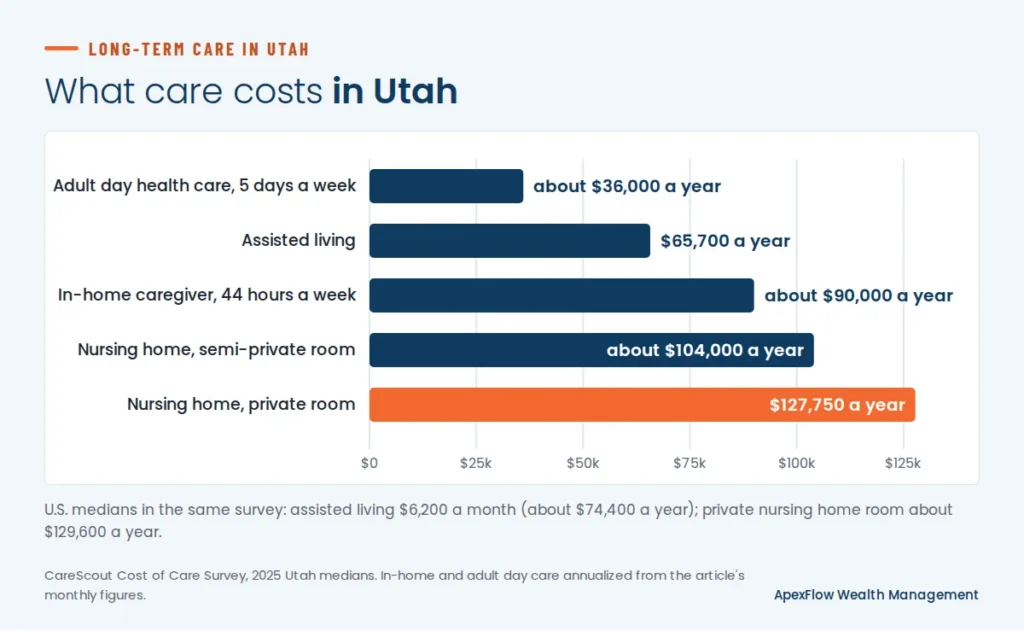
- In-home caregiver (homemaker or non-medical help): about $39 an hour, or roughly $7,500 a month at 44 hours a week.
- Adult day health care: about $140 a day, or about $3,000 a month at five days a week.
- Assisted living: about $5,475 a month, or $65,700 a year.
- Nursing home, semi-private room: about $285 a day, or roughly $104,000 a year.
- Nursing home, private room: about $350 a day, or $127,750 a year.
National medians in the same survey were $6,200 a month for assisted living and about $129,600 a year for a private nursing home room. Many families start with a few hours of help at home, so in-home costs scale with need. Prices also vary by county, and a plan for care that may begin ten or twenty years from now should grow these figures with an inflation assumption.
What Medicare covers and what it does not
Medicare pays for short-term skilled care, such as rehabilitation after a hospital stay, and not for ongoing help with daily living. Under Original Medicare, a skilled nursing facility stay is covered only after a medically necessary inpatient hospital stay of at least three consecutive days, counting the day of admission but not the day of discharge, and the skilled care generally has to start within 30 days of leaving the hospital. Time in the hospital under observation is outpatient status and does not count toward those three inpatient days, so it is worth asking about a parent’s status during a hospital stay.
For each benefit period, Medicare pays in full for days 1 through 20. For days 21 through 100 you pay a daily coinsurance, $217 for 2026. After day 100 you pay all costs.
Medicare does not cover custodial care if it is the only care you need, whether at home, in assisted living or in a nursing home. Medigap policies do not cover it either.
Utah Medicaid and long-term care
Utah Medicaid pays for nursing home care, and for some care at home or in the community through waivers, for people who meet medical and financial rules. For 2026:
- Assets. A single applicant can keep $2,000 in countable assets. A home can be exempt for eligibility in many cases.
- Married couples. When one spouse needs care, the spouse at home can generally keep half of the couple’s countable assets, but not less than $32,532 or more than $162,660 for 2026. Some of the applicant’s income can also be set aside each month for the spouse at home.
- Income. Utah does not use a fixed income cap for nursing home Medicaid. Income generally has to be below the private cost of the nursing home, and most of it goes to the facility each month after a $45 personal needs allowance.
- The five-year look-back. Gifts and other transfers for less than fair market value in the 60 months before an application can delay eligibility through a penalty period. The rule applies to nursing home and waiver applicants.
- Estate recovery. After the death of someone who received Medicaid at 55 or older, the Office of Recovery Services can seek repayment from the estate, including a home that was exempt during life. Recovery generally cannot proceed if there is a surviving spouse, a child under 21, or a child who is blind or permanently disabled.
Utah’s home and community-based waivers
- Aging Waiver (Home and Community-Based Waiver for Individuals Age 65 or Older). Serves people 65 and older who would otherwise qualify for nursing home care, with services at home. Referrals start with the local Area Agency on Aging.
- New Choices Waiver. Serves people 65 and older, and younger adults who meet disability criteria, who need a nursing facility level of care, and is designed to help people move from a nursing home or similar setting back into the community.
- Physical Disabilities Waiver. Serves adults with physical disabilities who would otherwise need institutional care.
Services depend on certified providers being available in your area. Medicaid planning is legal work, and if Medicaid may be part of the picture, an elder law attorney should be involved well before the look-back period matters.
Paying for care from your own savings
For many households with meaningful savings, the most practical plan is to self-fund: earmark part of the portfolio as a care reserve, invest it according to when it might be needed, and leave it out of the regular spending plan. At 2025 Utah medians, three years of assisted living comes to about $200,000, and three years in a private nursing home room to about $380,000, before inflation.
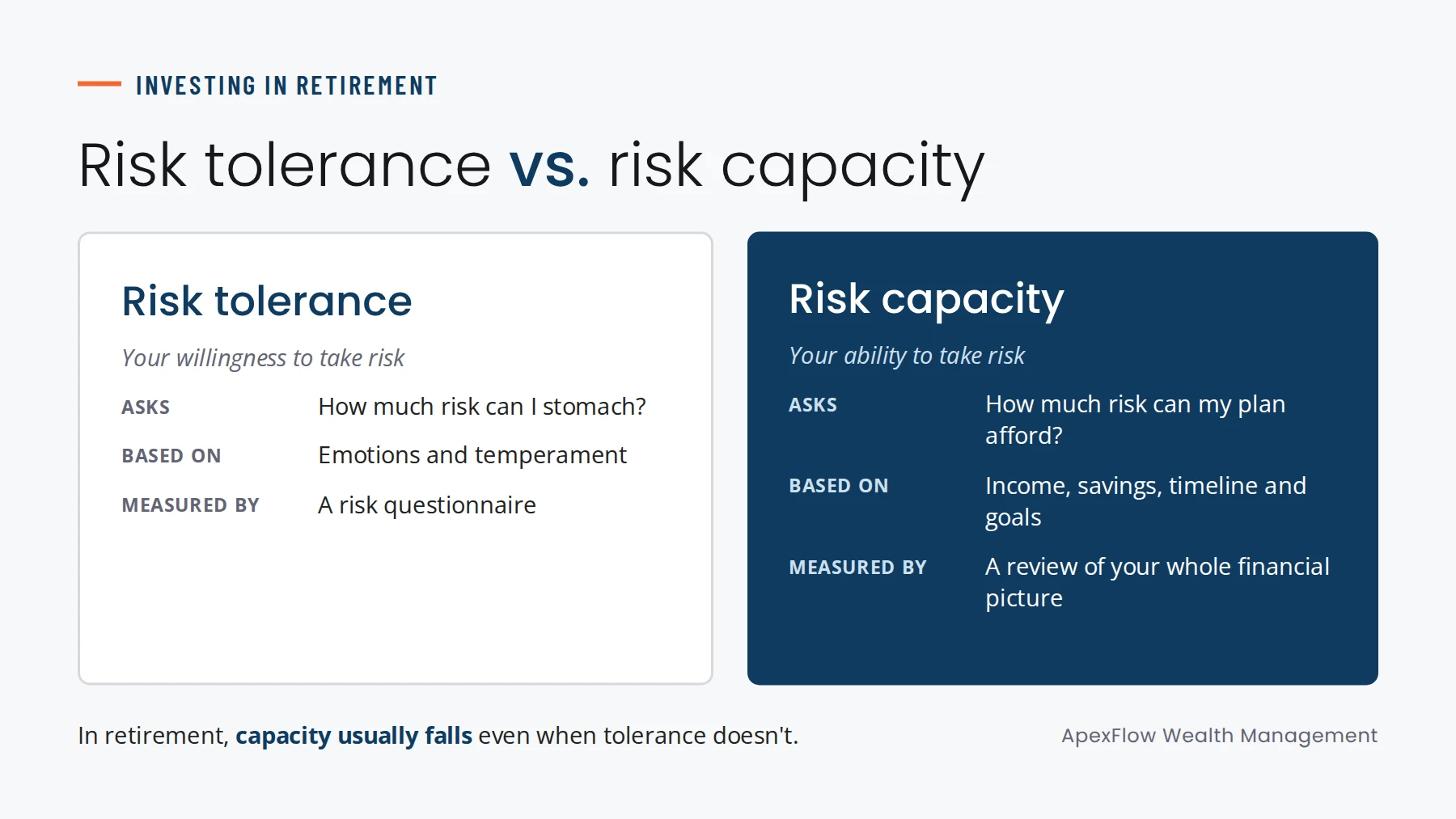
A reserve does not need to cover the worst case alone. A home that would be sold if one spouse moved into care, or income that would stop being spent on travel, can share the load. Whether self-funding fits depends less on your comfort with market swings than on your capacity to absorb a long, expensive stretch without harming a spouse’s security. Our article on risk tolerance versus risk capacity explains the difference.
Hypothetical example: A couple in Richfield, 72 and 69, have a paid-off home, $1 million in savings, and pensions and Social Security that cover their spending. Her mother needed memory care for several years, so care is on their minds. Their plan sets aside $300,000 as a care reserve, invested more conservatively than the rest of the portfolio, which at 2025 Utah medians would pay for more than four years of assisted living or a little over two years in a private nursing home room. He keeps an older traditional long-term care policy despite a recent premium increase because it pays a monthly benefit for help at home. They sign new powers of attorney and health care directives and tell their children in Provo where the documents are kept. The figures are hypothetical and do not represent any client.
Long-term care insurance, traditional and hybrid
Traditional policies. A traditional policy pays a daily or monthly benefit, up to a pool of money. Tax-qualified policies generally pay once you cannot perform two of six activities of daily living or need supervision because of severe cognitive impairment. Premiums are not guaranteed, and insurers have raised rates on many older policies with state approval. The main choices are the elimination period (a waiting period, often 90 days, before benefits start, which works like a deductible measured in time), the size and length of the benefit, and an inflation rider, which raises the benefit each year so that coverage bought at 60 keeps some pace with costs at 85. Buying younger and healthier lowers the premium, but you pay it for more years.
Hybrid life and annuity-based policies. Hybrid policies attach a long-term care benefit to life insurance. You typically pay a single premium or a set number of payments, and many designs fix the premium. If you need care, the policy pays benefits; if you never do, a death benefit goes to your heirs. Annuity-based versions pair a deferred annuity with a care benefit that can pay a multiple of the account value. The trade-off is usually less care coverage per premium dollar than a traditional policy, in exchange for knowing the money will be used one way or another. Features, costs and guarantees vary by insurer, and any guarantee depends on the claims-paying ability of the issuing company.
The Partnership Program. Utah has been a Long-Term Care Partnership state since October 1, 2014. If you own a qualified partnership policy and later apply for Utah Medicaid, Medicaid disregards assets equal to the benefits the policy paid. Not every policy qualifies, so ask whether a policy is approved for sale in Utah as a partnership policy before you buy.
HSA dollars and veterans’ benefits
Health savings accounts. HSA money can pay for qualified long-term care services and for qualified long-term care insurance premiums tax-free, up to an age-based limit per person. For 2026 the premium limits are $500 at age 40 or under, $930 from 41 to 50, $1,860 from 51 to 60, $4,960 from 61 to 70 and $6,200 over 70. An HSA left to grow through the working years can become a care fund later. Our article on health savings accounts covers how to build one.
VA Aid and Attendance. Veterans and surviving spouses who receive a VA pension can receive an added monthly amount if they need another person’s help with activities such as bathing, feeding and dressing, spend much of the day in bed because of illness, or live in a nursing home because of a loss of mental or physical ability. VA pension has income and net worth limits, and the net worth limit is $163,699 through November 30, 2026. VA-accredited representatives can help with the application.
Four planning steps
Decide what you want. Where would you want to receive care: at home, near a child in Utah County, in an assisted living community close to your church or friends? Who should make decisions if you cannot? Families who talk this through before a crisis make calmer choices.
Estimate the cost in your plan. Put a care scenario in the retirement projection, for example three years of assisted living starting at 85, grown from today’s Utah figures, and see what it does to the rest of the plan. Our retirement budget article covers the spending side.
Decide who pays. Self-fund, insure, combine the two, or plan around Medicaid. For a married couple the answer can differ by spouse. Tax treatment of premiums, HSA withdrawals and policy benefits is worth confirming with your CPA.
Sign the documents. A durable financial power of attorney and a Utah advance health care directive let people you choose act for you if you cannot. Without them, a family may need a court guardianship or conservatorship. Our estate planning checklist lists the rest, and our article on leaving a home to your kids covers the house, which often becomes part of the care conversation.
Where we fit
We build a care scenario into retirement projections and show how a reserve, a policy or both change the outcome for each spouse. Through our Salt Lake City financial planning work and the Purposeful Planning Process, we coordinate with your elder law attorney and CPA so the care plan, the estate plan and the investments point in the same direction.
Frequently asked questions
No. Medicare does not pay for custodial care or room and board in assisted living. Utah Medicaid waivers can pay for some care services outside a nursing home for people who meet the medical and financial rules.
The 2025 CareScout survey put the Utah median at about $285 a day for a semi-private room and $350 a day for a private room, or roughly $104,000 and $127,750 a year.
Gifts made in the five years before applying can delay eligibility through a penalty period, and a home kept in your name can be subject to estate recovery after death. Any transfer plan should be built with an elder law attorney.
It is most often considered by households with assets worth protecting but not enough to self-fund a long stay comfortably, and who can absorb future premium increases. Health and age at purchase drive both price and approval.
Talk it through with us
Every situation is a little different. If you want to talk through yours, book a 20-Minute Fit Call with one of our advisors, by video or in person. No prep and no obligation. Want to see how we work first? Start with the Purposeful Planning Process or our services.

The information in this article is general in nature and is not a recommendation for any individual. Consider your own circumstances or speak with an advisor before acting on it. Any opinions are those of the author and not necessarily those of Raymond James.
ApexFlow Wealth Management does not provide tax or legal advice. Please consult your tax or legal professional before acting on any strategy mentioned here.
Investing involves risk, and you may incur a profit or loss regardless of the strategy selected, including diversification and asset allocation. Past performance does not guarantee future results.
Examples labeled as hypothetical are for illustration only. They are not based on any actual client and do not represent actual or expected results.
Related Articles
Dig deeper into our resource library
-
 November 5, 2026
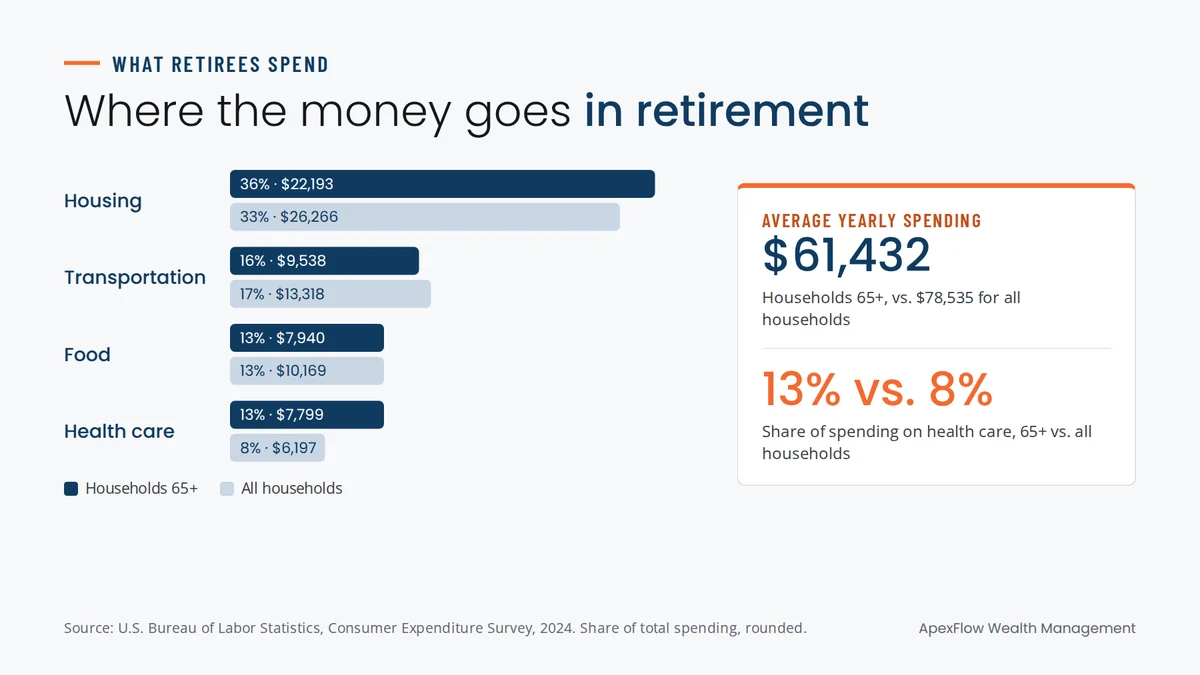
How to Build a Retirement Budget That Lasts
For decades, your budget had a built-in safety net: the next paycheck. Retirement changes that. Your income now comes from Social Security, maybe a pension,Read more -
 November 6, 2026
Risk Tolerance vs. Risk Capacity in Retirement
Ask most people about their investment risk and you’ll get an answer about how they feel. “I don’t like watching my account drop.” “I canRead more -
 November 5, 2026
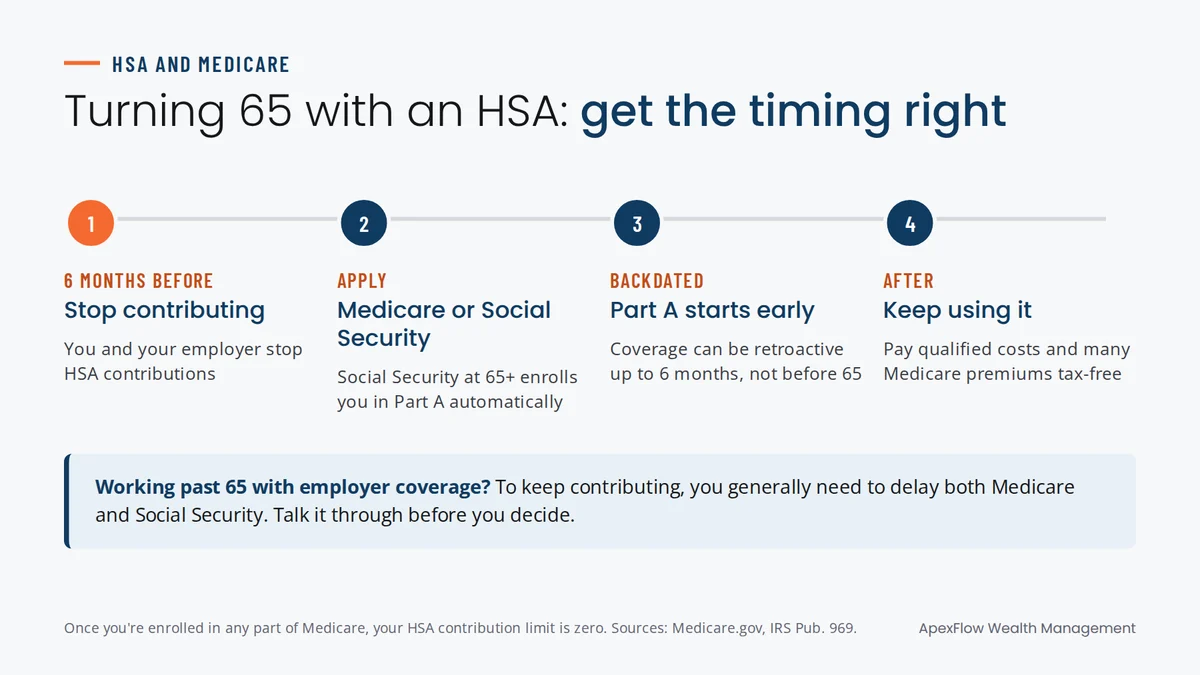
Using Your HSA for Retirement (and the Medicare Rule to Know)
Health care planning is one of the few areas of life where unpredictability isn’t the exception but the expectation. Costs shift, coverage evolves and importantRead more