
There’s a particular kind of silence that shows up around estate planning. Parents don’t want to talk about it because it means talking about their own mortality. Adult children don’t bring it up because it feels like they’re asking about money, or worse, asking when. So the conversation just doesn’t happen, sometimes for decades, until it has to. If you’ve been wondering how to talk to adult children about inheritance without making it awkward, this is the place to start.

At a glance
- Most parents with an estate plan haven’t explained it to their kids. That silence, not the money, is what tends to cause conflict later.
- The goal isn’t to announce dollar figures. It’s to share that a plan exists, who’s in charge, where things are and the reasoning behind any decision that might surprise someone.
- A short, planned family meeting, often with an advisor in the room, makes the conversation far easier than people expect.
Most families have a plan but haven’t talked about it
We’ve sat with families on both sides of that silence, the ones who talked and the ones who didn’t. The difference it makes is hard to overstate.
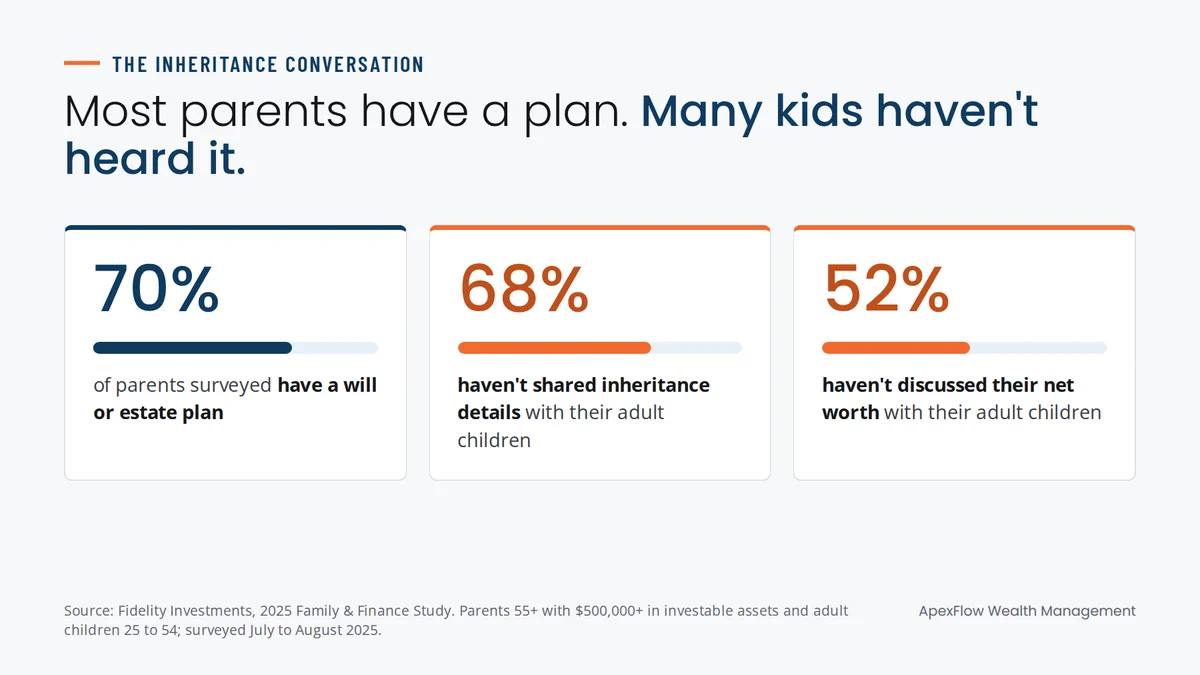
The numbers back that up. In Fidelity’s 2025 Family & Finance Study of parents 55 and older with at least $500,000 in investable assets, 70% had created a will or estate plan. But 68% had yet to share inheritance details with their children, and 52% hadn’t discussed their net worth with them. This can be as small as a 529, or as large as an estate.
What happens when nobody talks
When a family has never discussed the estate plan and something happens, the surprises don’t stop at who gets what. They show up as:
- Confusion about where documents even are
- Disagreement about what Mom or Dad “would have wanted,” with everyone remembering it differently
- Resentment when one sibling was named executor or trustee and nobody understood why
- Shock when a decision, like an unequal split between children, turns out to have a reasonable explanation nobody ever heard
None of that is really about the money. It’s about the absence of context. A plan without an explanation looks, to the people left behind, exactly like a decision made without them in mind, even when the opposite is true.
Why families avoid the inheritance conversation
The discomfort is real and worth naming. Parents sometimes worry that talking about the estate plan will make them seem like they’re keeping score, or invite conflict they’d rather avoid while they’re still alive to referee it. Some worry that talking about an inheritance will dull their kids’ motivation. Adult children often worry that asking questions will look like they’re eager for an inheritance, so they say nothing and hope it works itself out.
Both instincts come from care, not carelessness. But the silence they create tends to cost the family more than the conversation ever would have.
Reframe it: this is about intention, not dollars
This isn’t a conversation about dividing up money. It’s a conversation about intention. The goal isn’t to announce dollar figures or account balances. It’s to make sure the people you love understand the why behind the plan, so that when the time comes, they’re not left reconstructing your intentions from scratch during the hardest weeks of their lives.
Framed that way, it stops being a conversation about death and starts being a conversation about care. You’re not handing your family a bill to settle. You’re handing them clarity they won’t have to build themselves under pressure.

What to share with your adult children (and what you can keep private)
You don’t have to disclose every number to have a meaningful conversation. What tends to matter most:
| Usually worth sharing | Fine to keep private if you prefer |
|---|---|
| That a plan exists, and roughly what kind of documents are involved (a will, a trust, powers of attorney) | Exact account balances and net worth |
| Who’s been named executor, trustee or power of attorney, and a brief sense of why | Specific dollar amounts each person will receive |
| Where the documents are kept and who to call: your attorney, CPA and advisor | Every detail of how assets are invested |
| Your wishes for health care, caregiving, the family home, heirlooms or a business | Decisions you’re still working through |
| The reasoning behind anything that isn’t an even split |
That last item is the one that matters most. Context defuses far more conflict than silence does. If one child is receiving more because they’ve been a caregiver, or less because they received help with a home years ago, saying so while you can explain it in your own words is a gift to everyone.
If your plan involves a trust, it also helps to explain how it works and who the successor trustee is. We cover when a trust makes sense in Do You Need a Trust?
How to talk to adult children about inheritance: 5 ways to start
There’s no perfect script, but a few approaches tend to work better than others.
Tie it to a natural moment. A birthday, a health scare in the extended family, a new grandchild, finishing or updating your estate plan. Any of these works better than springing it out of nowhere.
Frame it around care rather than logistics. “I want to make sure you’re never scrambling to figure out what I wanted” lands very differently than “we need to talk about my will.”
If you’re the adult child, lead with concern rather than curiosity. Something closer to “I want to make sure you and Dad have things set up the way you want” rather than “what’s actually in the will.”
Decide who’s in the room. Many families start with just the adult children, then include spouses later. Whatever you choose, try to tell everyone the same thing at the same time, so no one hears it secondhand.
Treat it as a series, not a single sitting. Families who handle this well often treat it as an ongoing, low-pressure thread rather than one heavy conversation, updated as circumstances change over the years.
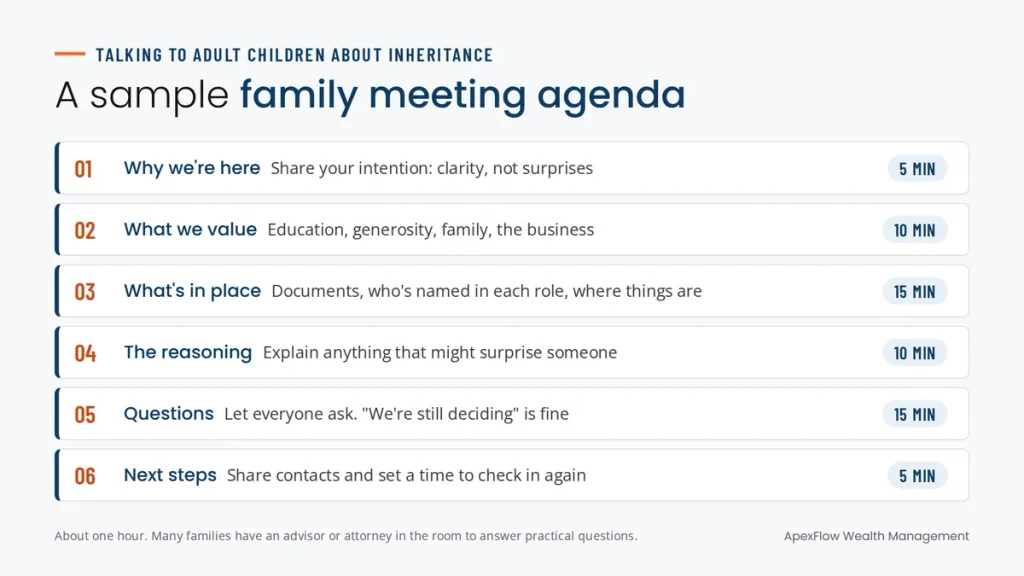
A sample family meeting agenda
If a formal sit-down feels right for your family, a simple agenda keeps it focused and keeps it to about an hour:
- Why we’re here (5 minutes). Share your intention: you want everyone to have clarity, not surprises.
- What we value (10 minutes). Talk about what matters to you, such as education, generosity, the family business or keeping the family close.
- What’s in place (15 minutes). Walk through the types of documents, who’s named in each role and where everything is kept.
- The reasoning (10 minutes). Explain any decisions that might surprise someone, like an unequal split or a trustee choice.
- Questions (15 minutes). Let everyone ask. It’s fine to say “I’ll think about that” or “we’re still deciding.”
- Next steps (5 minutes). Share the contact information for your attorney, CPA and advisor, and agree on when you’ll check in again.
If you own a business, talk about that too
Family businesses are where silence tends to do the most damage. If one child works in the business and another doesn’t, or if a partner has the right to buy out your heirs, your family needs to understand that before it matters. We explain how that works in Buy-Sell Agreement Basics.

Where we fit in
Sometimes the easiest way to have this conversation is with a third party in the room, someone who can walk through the plan, answer the practical questions and keep the discussion focused on structure rather than emotion. We’ve facilitated exactly that conversation for families more than once, and it tends to go better than anyone expects going in.
Family meetings and preparing the next generation are part of our estate planning work, and they fit naturally into the Deploy stage of our planning process, where the plan moves from paper into real life.
Frequently asked questions
Sooner is usually better, ideally while you’re healthy and can explain your reasoning yourself. Good times include after you finish or update your estate plan, after a major life event or when your children are settled into adulthood.
That’s your choice. Many parents share the structure and reasoning of their plan without sharing dollar amounts. What matters most is that no one is surprised by who’s in charge or why decisions were made.
Explain the reason in your own words, ideally in person. Common reasons include caregiving, earlier financial help or a child’s role in a family business. Some parents also put a short letter with their estate documents explaining their thinking.
It depends on your family. Many parents start with their children only, then include spouses for later conversations. Being consistent, so every family unit hears the same information, matters more than the exact format.
Yes. An advisor can explain how the plan works, answer practical questions and keep the meeting on track, which takes pressure off parents and lets everyone focus on the conversation.
Talk it through with us
If it’s been a while since your family has talked about this, or if it’s never happened at all, we’d be glad to help create the space for it. Book a 20-minute Fit Call. It’s virtual, no prep is needed and there’s no obligation.
With clarity and confidence,

Investing involves risk and you may incur a profit or loss regardless of strategy selected, including diversification and asset allocation. Raymond James and its advisors do not offer tax or legal advice. You should discuss any tax or legal matters with the appropriate professional.
Related Articles
Dig deeper into our resource library
-
 October 7, 2026
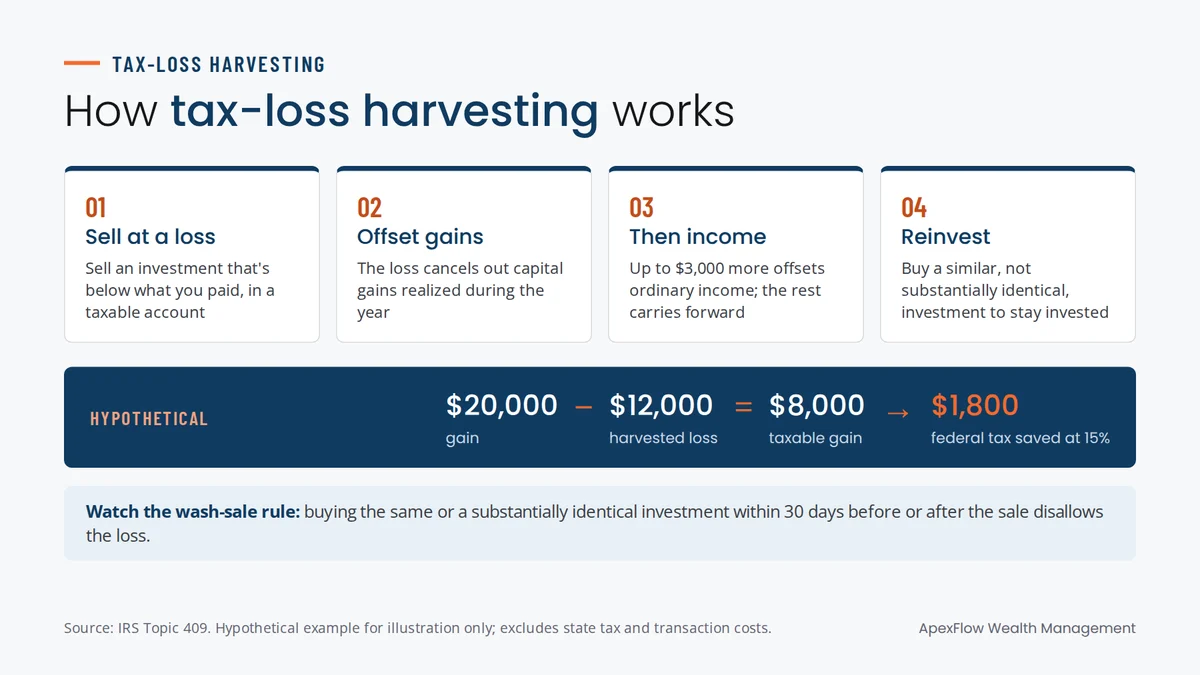
Tax-Loss Harvesting: How It Works and How to Avoid the Wash-Sale Rule
No one likes seeing an investment lose value. But in a taxable account, a loss can have a silver lining. Tax-loss harvesting means selling anRead more -
 October 7, 2026
Using Utah’s my529 Plan as a Grandparent
Helping pay for a grandchild’s education is one of the most meaningful gifts a grandparent can give. It’s also one of the most tax-efficient. Utah’sRead more -
 October 7, 2026
How to Build a Retirement Budget That Lasts
For decades, your budget had a built-in safety net: the next paycheck. Retirement changes that. Your income now comes from Social Security, maybe a pension,Read more