
There’s a comforting myth about estate planning: that it’s a project with an end date. You meet with an attorney, sign the documents and check the box. Done.
It doesn’t quite work that way. An estate plan is a snapshot of your life and the law at the moment it was written, and both keep moving after you sign. A move across state lines is one of the biggest of those changes. If you’re wondering whether you need to update your estate plan after moving to Utah, the answer is almost always yes, at least to a review. Here’s what changes, and how to think about when it’s time to look again.

At a glance
- Your old documents don’t stop working when you move, but they were written for another state’s laws, forms and taxes.
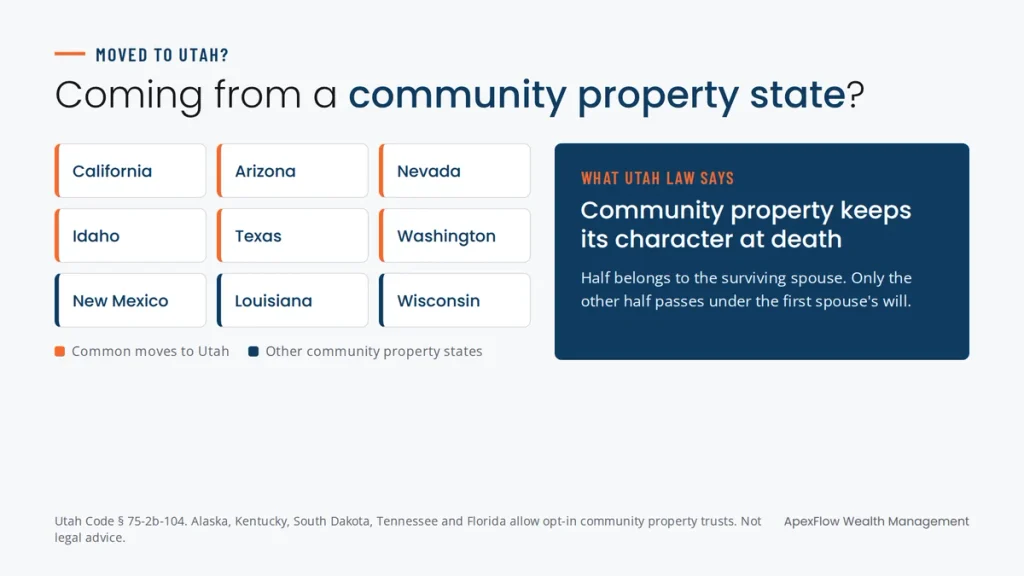
- Couples coming from a community property state like California, Arizona, Nevada, Idaho, Texas or Washington have the most to review.
- Even without a move, plan on a review at a cadence that fits your lifestyle and always after any major life event.
Why moving to Utah changes your estate plan
Utah generally honors a will that was validly signed in another state, so your plan doesn’t become invalid the day you arrive. The issue is that it was built around another state’s rules. A few differences tend to matter most.
1. Community property doesn’t disappear when you move
Nine states use community property rules, which generally treat most assets earned during a marriage as owned equally by both spouses. Utah isn’t one of them. But under Utah’s version of the Uniform Disposition of Community Property Rights at Death Act, property that was community property before you moved generally keeps that character at death. Utah Code § 75-2b-104 says half of it belongs to the surviving spouse and only the other half can be passed by the first spouse’s will.
That can surprise couples whose wills assume each spouse controls everything in their own name. How that property is treated can also affect taxes, so it’s worth tracing which assets came from where with your attorney and CPA.
2. Your documents may not match Utah forms and terms
Powers of attorney and health care directives are the documents most likely to cause friction after a move. Utah has its own Advance Health Care Directive Act and its own statutory forms. An out-of-state document may still be valid, but banks, hospitals and title companies are often more comfortable acting on documents that look familiar. Even small differences, like Utah calling an executor a “personal representative,” can slow things down at a stressful time.
3. State taxes are different here
Utah has no estate tax, and the Utah State Tax Commission notes that its inheritance tax was eliminated after 2004. If you moved from a state with its own estate or inheritance tax, your plan may include structures you no longer need. But if you still own real estate in your old state, that state may tax it at your death.
4. Property you left behind can mean a second probate
A cabin in Idaho or a rental in California can trigger a separate probate in that state, called ancillary probate. Moving that property into a revocable living trust is a common way to avoid it. We explain when a trust makes sense in Do You Need a Trust?
5. The people you named may now be far away
An executor, trustee or guardian who lived down the street may now be several states away. They can often still serve, but distance makes the job harder. A move is a natural time to ask whether the people you named are still the right fit.
How often should you update your estate plan?
Even without a move or a major life change, it’s worth having an estate attorney review your documents every three to five years. Laws shift, finances change gradually and small drift adds up. A periodic check-in catches that before it becomes a real gap.
Life events that should trigger a review sooner
A handful of moments matter more than a calendar date, and any one of them is worth an immediate review rather than waiting for your next scheduled check-in.
Moving to a new state. Estate laws, especially around community property, probate procedure and state estate or inheritance taxes, vary significantly by state. A plan drafted under one state’s laws should be reviewed by an attorney licensed in your new state.
Marriage or divorce. These are the two events most likely to make an existing plan actively wrong rather than just outdated. An ex-spouse still listed as a beneficiary or executor isn’t just an oversight; it can override what you’d actually want.
A new child or grandchild. Beyond simply adding them, this is the moment to name or update guardians and consider how a trust might structure an inheritance for someone too young to manage it.
A death in the family. If someone named in your plan, an executor, trustee or guardian, passes away, that role needs a new name. This gets missed more often than you’d expect.
Buying, starting or selling a business. A significant business event changes what your estate contains and often requires new coordination between your personal plan and any buy-sell agreement already in place. We cover that in Buy-Sell Agreement Basics.
A significant change in assets. An inheritance, a major liquidity event or a big change in net worth in either direction can shift which planning tools make sense.

The 2026 estate tax change most people don’t realize applies to them
Federal estate tax law shifted meaningfully heading into 2026. Under the One Big Beautiful Bill Act, the federal estate and gift tax exemption rose to $15 million per person, or $30 million for a married couple, up from just under $14 million in 2025. This higher level is now permanent and adjusts for inflation each year, rather than dropping to a lower amount as previously scheduled.
For most families, federal estate tax is unlikely to apply at all. But that doesn’t mean estate planning matters less; it means the reasons for it have shifted. Plans built around the old, lower exemption, sometimes using complex trusts designed to minimize a tax that no longer applies at the same threshold, may now be more complicated than they need to be. If your plan was last updated before 2026, this alone is worth a conversation.
The quiet gap: beneficiary designations
Here’s the detail that surprises people most: your will doesn’t control everything. Retirement accounts, life insurance policies and many investment accounts pass directly to whoever is named on the beneficiary designation, regardless of what your will says. If you updated your will after a divorce but never updated the beneficiary form on an old 401(k), that ex-spouse may still legally inherit that account. Reviewing beneficiary designations should happen alongside every estate plan update, not as an afterthought.
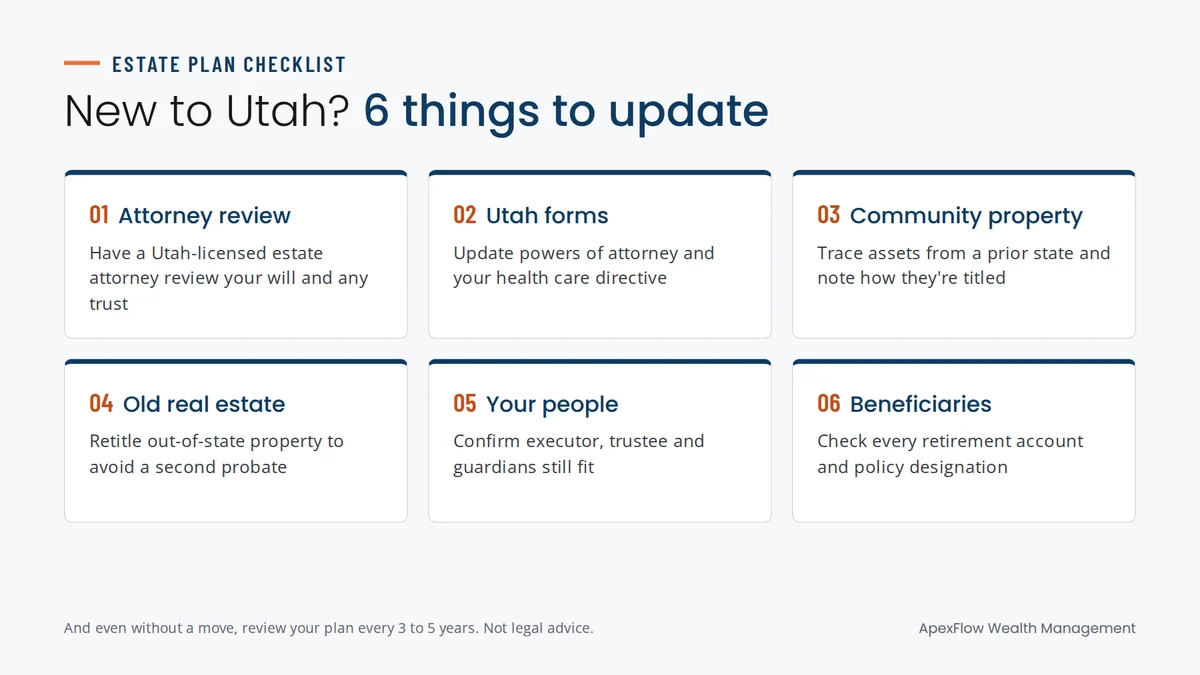
How to update your estate plan after moving to Utah: a checklist
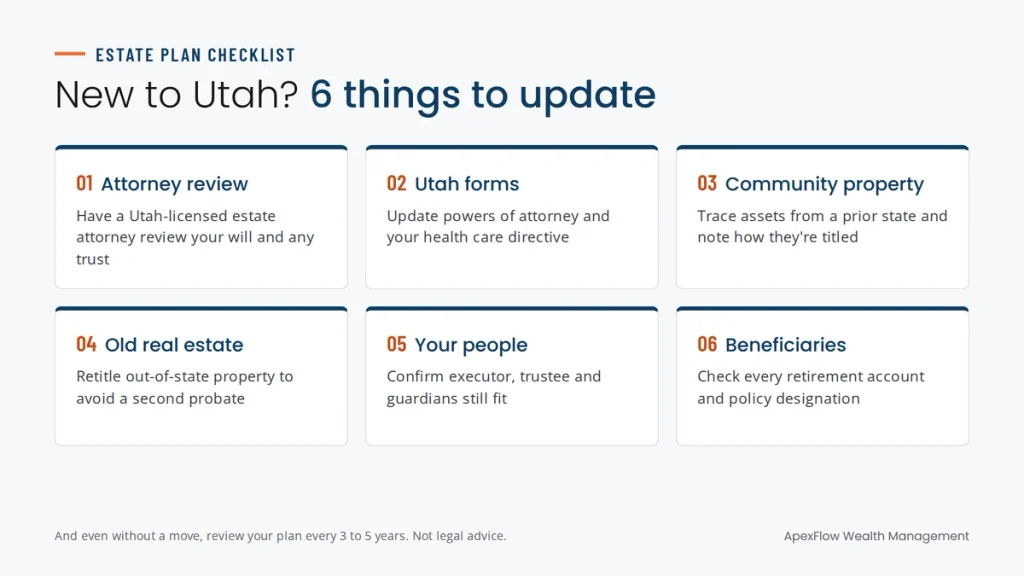
A review doesn’t necessarily mean rewriting everything. After a move, it usually means:
- Have a Utah-licensed estate attorney review your will and any trust.
- Update your powers of attorney and health care directive using Utah forms.
- Trace any community property from a previous state and note how it’s titled.
- Retitle out-of-state real estate into your trust, or plan for it another way.
- Confirm your executor, trustee and guardians are still the right people and still willing to serve.
- Check every beneficiary designation so it matches your current wishes.
If you don’t have a will yet, start with What Happens If You Die Without a Will in Utah?, which explains the state’s default rules.

Where we fit in
We don’t draft or revise the legal documents themselves, but we help track the moments that should trigger a review, and we coordinate directly with your estate attorney and tax professional so your plan and your broader financial picture keep moving together instead of drifting apart. For families new to Utah, that often includes helping find a local estate attorney.
You can read more about how we work alongside your attorney on our estate planning page, or see how reviews fit into our planning process.
Frequently asked questions
Generally, yes. Utah usually honors a will that was validly signed under the laws of the state where it was made. Still, it’s worth having a Utah attorney review it, since it was written around another state’s rules.
Not always, but it’s often a good idea. Out-of-state documents may still be valid, yet banks and hospitals tend to move faster with documents that follow Utah’s forms.
No. Utah has no estate tax, and its inheritance tax was eliminated after 2004. The federal estate tax still applies to estates above $15 million per person in 2026.
No. But if you and your spouse lived in a community property state before moving, property you acquired there may still be treated as community property at death under Utah law.
Plan on a review every three to five years, and sooner after a move, marriage, divorce, birth, death in the family, business event or big change in assets.
Talk it through with us
If you’ve moved to Utah, it’s been more than a few years, or any of the events above have happened since your plan was last touched, that’s worth a conversation now rather than a surprise later. Book a 20-minute Fit Call. It’s virtual, no prep is needed and there’s no obligation.

Investing involves risk and you may incur a profit or loss regardless of strategy selected, including diversification and asset allocation. Raymond James and its advisors do not offer tax or legal advice. You should discuss any tax or legal matters with the appropriate professional.
Related Articles
Dig deeper into our resource library
-
 October 7, 2026
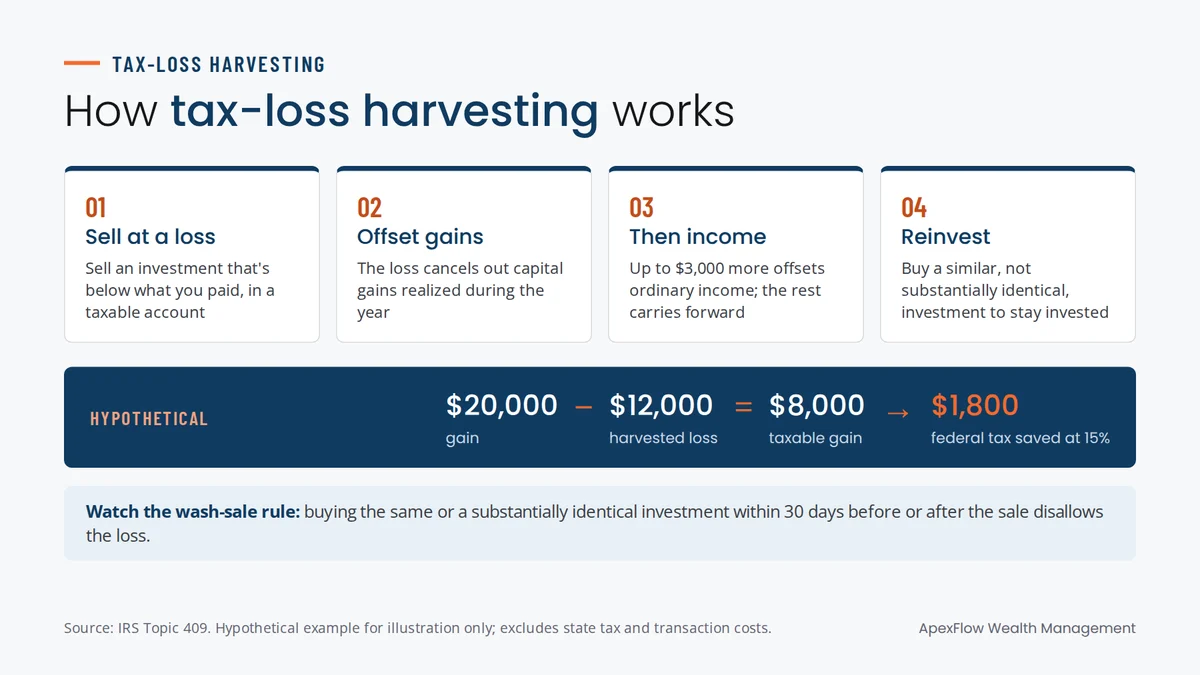
Tax-Loss Harvesting: How It Works and How to Avoid the Wash-Sale Rule
No one likes seeing an investment lose value. But in a taxable account, a loss can have a silver lining. Tax-loss harvesting means selling anRead more -
 October 7, 2026
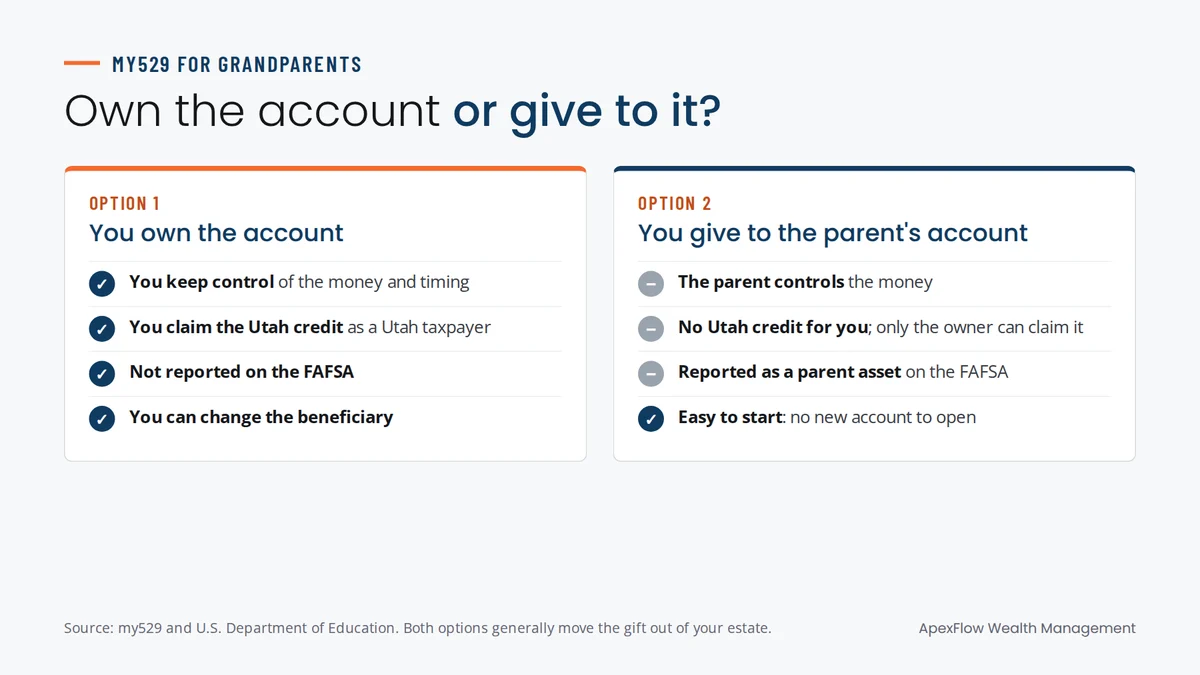
Using Utah’s my529 Plan as a Grandparent
Helping pay for a grandchild’s education is one of the most meaningful gifts a grandparent can give. It’s also one of the most tax-efficient. Utah’sRead more -
 October 7, 2026
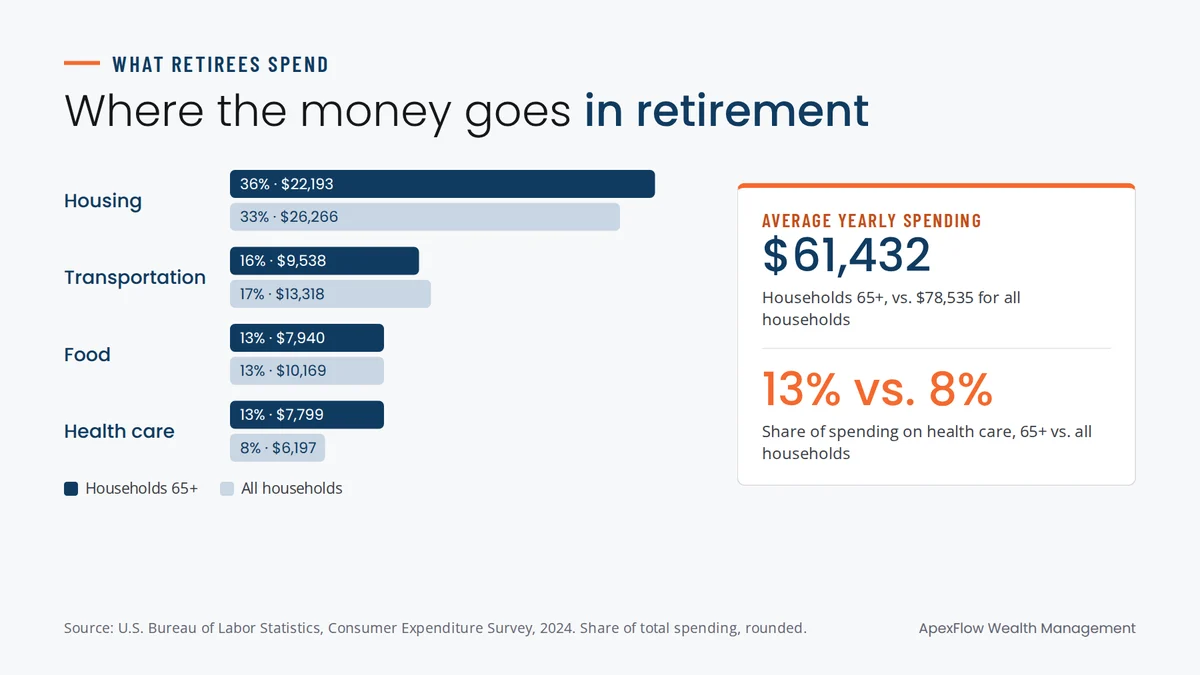
How to Build a Retirement Budget That Lasts
For decades, your budget had a built-in safety net: the next paycheck. Retirement changes that. Your income now comes from Social Security, maybe a pension,Read more