
When people think about investing, stocks usually get all the attention. They’re exciting, discussed on the news and often responsible for the biggest gains in a portfolio. But if stocks are the engine of a portfolio, bonds are the suspension system. You may not notice them every day, but when the road gets rough, you’re glad they’re there. Nowhere is that truer than with bonds in retirement, when your portfolio stops just growing and starts paying the bills.

At a glance
- Bonds play three roles in a retirement portfolio: steadying the ride, producing income and balancing risk.
- Their most important job in retirement may be protecting the money you’ll spend in the next several years, so a downturn doesn’t force you to sell stocks at a loss.
- Bonds aren’t risk-free. Rising interest rates, inflation and credit risk can all affect them, which is why the type of bond and how you hold it matter.
What is a bond?
At its core, a bond is simply a loan. When you buy a bond, you’re lending money to a government, municipality or company. In exchange, the issuer agrees to:
- Pay you interest along the way
- Return your original investment when the bond matures
Think of it like lending your neighbor $1,000 with a written agreement that they’ll pay you 4% interest every year and return the $1,000 in five years. You’re not buying ownership like you would with a stock. You’re acting as the lender.
Why bonds matter more in retirement
While you’re working, a market downturn is painful but survivable. Your paycheck covers your spending, and new savings buy investments at lower prices. In retirement, money flows the other way. You’re selling investments to create income, and selling stocks after a big drop locks in losses that can’t recover.
That’s called sequence-of-returns risk: a bad market early in retirement does more lasting damage than the same decline later, because you’re withdrawing at the worst time. We explain it in more detail in Should You Move to Cash Before Retirement?
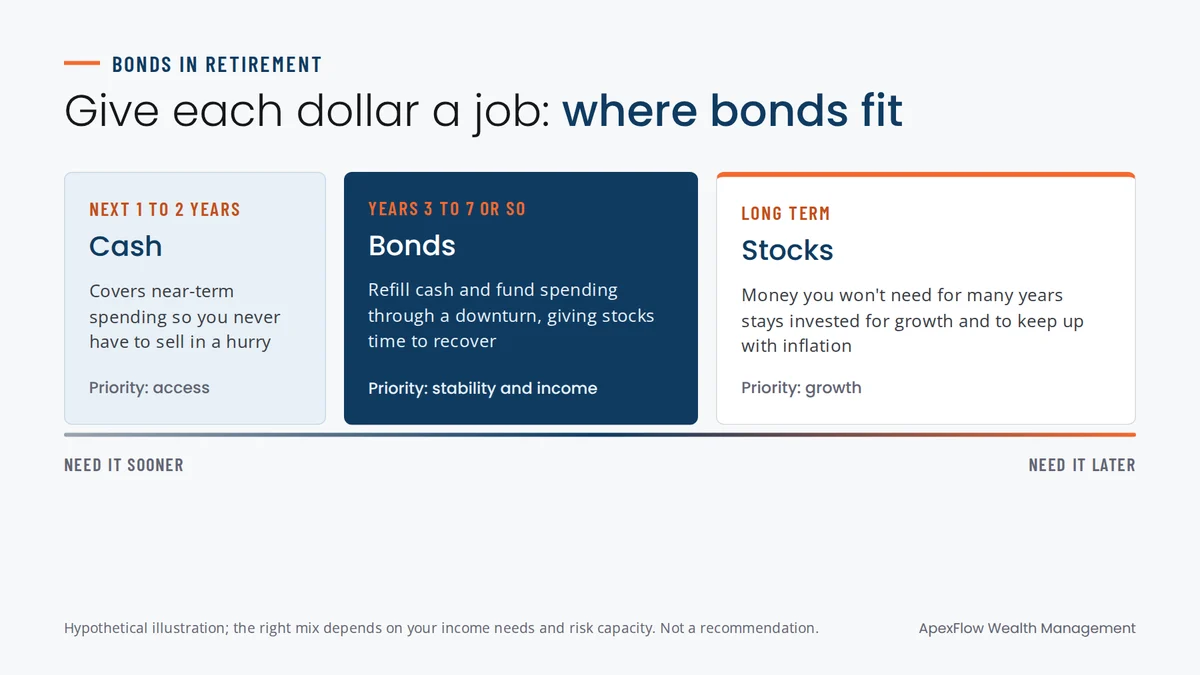
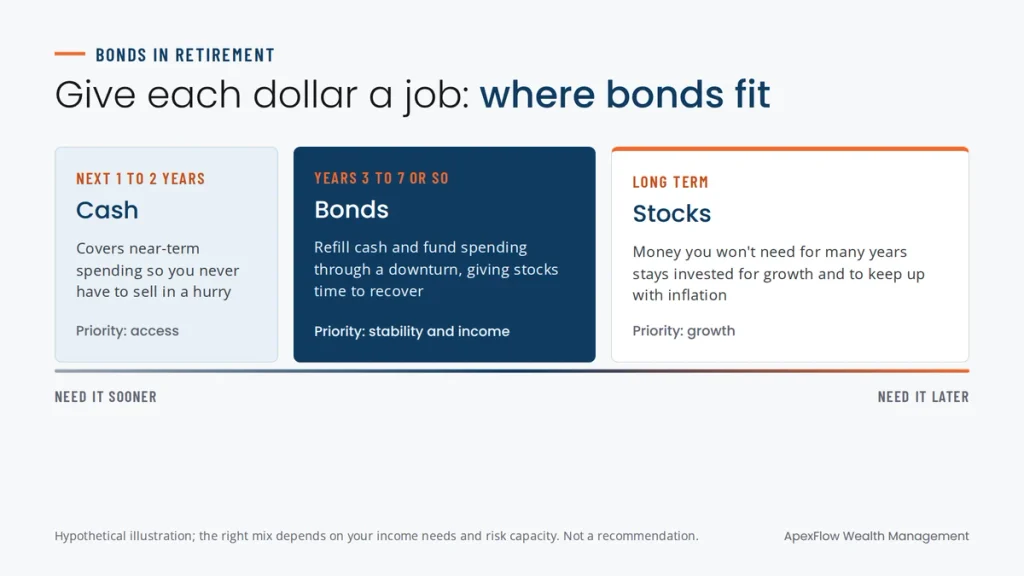
Bonds are one of the main tools for managing it. Money set aside in bonds can fund several years of spending, giving your stocks time to recover before you need to sell them.
Three jobs bonds do in a retirement portfolio
1. They help smooth out the ride
Imagine you’re driving through the mountains. A sports car with stiff suspension may be fast, but every bump feels magnified. An SUV with good suspension still moves forward, but the ride is much smoother. Stocks often behave like the sports car. Bonds often act like the suspension. Both may be headed to the same destination, but the journey feels very different.
Historically, high-quality bonds have been less volatile than stocks and have often helped steady a portfolio during market stress. That doesn’t mean bonds eliminate risk. They don’t. But in many cases, the greatest value of bonds isn’t what they earn. It’s what they help investors avoid: emotional, poorly timed decisions. We explore why those decisions are so tempting in Loss Aversion: Why Market Downturns Feel Worse Than They Are.
A hypothetical example. Two retirees each have $1 million. Investor A holds only stocks. Investor B holds 60% stocks and 40% bonds. If stocks fall 20% and bonds hold their value, Investor A’s portfolio drops to $800,000. Investor B’s drops to $880,000, a 12% decline instead of 20%. Neither enjoys it, but Investor B has $400,000 in bonds to draw from while stocks recover.
This example is hypothetical and for illustration only. It ignores taxes, fees and withdrawals and assumes bonds held their value, which doesn’t always happen. It does not represent any specific investment.
2. They create a stream of income
Most bonds pay periodic interest, often called coupons. Think of owning a rental property: its value may rise and fall over time, but the rent checks keep coming. Bond interest works similarly. While a bond’s market value can fluctuate, you generally receive regular interest payments for the life of the bond, and your principal back at maturity if the issuer doesn’t default.
That predictability is especially valuable for retirees who want part of their portfolio producing income regardless of the day’s headlines.
3. They help balance risk
Different investments often behave differently in the same conditions. Think about building a house: you need a foundation, framing, walls and a roof, and each does a different job. Stocks are generally there to grow wealth over time. Bonds are generally there to provide stability and income. Together, they can create a stronger structure than either alone.
Nobody buys a house because of its foundation. But when storms arrive, everyone appreciates the strength underneath.

A bond ladder for retirement income
One of the simplest ways to use bonds in retirement is a bond ladder. According to Fidelity, a bond ladder staggers the maturities of your bonds and creates a schedule for reinvesting as each one matures.
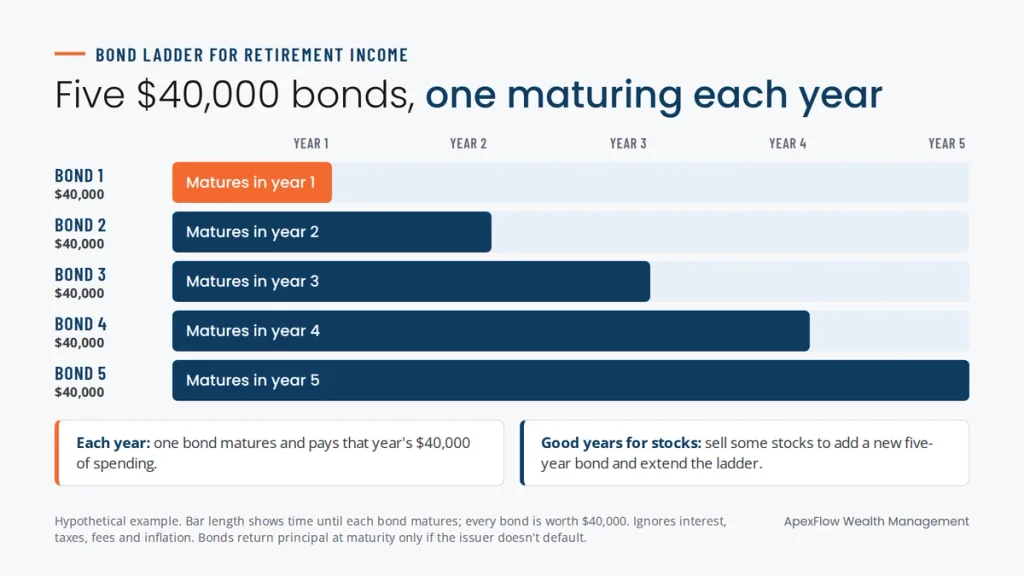
A hypothetical example. Say a retired couple needs $40,000 a year from their portfolio on top of Social Security. They build a five-year ladder: five bonds of $40,000 each, maturing one per year.
| Year | What happens |
|---|---|
| 1 | The first bond matures and pays this year’s $40,000 of spending |
| 2 | The second bond matures and covers next year |
| 3 to 5 | Each year, another bond matures to fund that year’s spending |
| Along the way | In years when stocks are up, they sell some stocks to buy a new five-year bond and extend the ladder. In down years, they let the ladder carry them. |
The couple always knows where the next five years of spending will come from, so a bear market doesn’t force them to sell stocks at a low point.
This example is hypothetical and for illustration only. It ignores interest, taxes, fees and inflation and does not represent any specific investment. Bonds held to maturity return principal only if the issuer doesn’t default.
Types of bonds retirees often use
| Type | What it is | Worth knowing |
|---|---|---|
| U.S. Treasuries | Loans to the federal government | Backed by the U.S. government; interest is exempt from state income tax |
| Treasury Inflation-Protected Securities (TIPS) | Treasuries whose principal adjusts with inflation | Designed to help protect purchasing power |
| Municipal bonds | Loans to states and cities | Interest is often exempt from federal income tax, which can appeal to higher earners |
| Corporate bonds | Loans to companies | Usually pay more than Treasuries, with more credit risk |
| Bond funds | A diversified pool of many bonds | Easy to own, but have no fixed maturity date, so values move with interest rates |
The risks bonds still carry
Bonds are steadier than stocks, not risk-free. A few risks matter most in retirement:
- Interest rate risk. When rates rise, existing bond prices fall. In 2022, the Bloomberg U.S. Aggregate Bond Index fell about 13%, its worst calendar year on record, according to Forbes, and stocks fell at the same time. Holding individual bonds to maturity, as in a ladder, can reduce the impact of price swings.
- Inflation risk. Fixed payments buy less as prices rise, which is one reason TIPS and some stock exposure still matter in retirement.
- Credit risk. Lower-quality issuers pay more interest because they’re more likely to default.
That’s why we don’t treat “bonds” as one thing. The mix of types, maturities and quality should match when you’ll need the money.
How much should you hold in bonds in retirement?
There’s no single right number. Rules of thumb tied to your age can be a starting point, but the better question is how many years of spending you want protected from a stock market decline, and how much risk your plan can absorb. We explain that difference in Risk Tolerance vs. Risk Capacity in Retirement. Many retirees pair a cash reserve for the next year or two with bonds for the several years after that, and keep the rest invested for growth.
The bigger picture
At ApexFlow, we believe financial planning is ultimately life planning. Bonds rarely make headlines, and they aren’t designed to generate excitement. Their value comes from the role they play in a larger strategy, and perhaps most importantly, from helping you stay invested during difficult periods.
Successful investing isn’t about choosing between stocks and bonds. It’s about understanding how each can work together to support a purposeful plan. That’s how we build portfolios in the Design stage of our planning process.
Frequently asked questions
Most retirees benefit from some bonds, because they can fund near-term spending and reduce the need to sell stocks in a downturn. How much depends on your income needs, other income sources and comfort with risk.
It’s a set of bonds that mature at staggered dates, such as one each year for five years. As each bond matures, the money can fund spending or be reinvested in a new bond at the end of the ladder.
Bonds are generally less volatile than stocks, but not risk-free. Their prices fall when interest rates rise, inflation can erode their value and lower-quality bonds carry default risk.
Each has trade-offs. Individual bonds have a set maturity date, which makes them useful for ladders. Bond funds offer easy diversification but don’t mature, so their value moves with interest rates.
There’s no single answer. A useful starting point is how many years of withdrawals you want protected from a stock downturn, often several years, combined with how much risk your plan can absorb.
Talk it through with us
If you’re nearing retirement and aren’t sure whether your bonds are set up to do their job, that’s worth a conversation. Book a 20-minute Fit Call. It’s virtual, no prep is needed and there’s no obligation.

Investing involves risk and you may incur a profit or loss regardless of strategy selected, including diversification and asset allocation. Raymond James and its advisors do not offer tax or legal advice. You should discuss any tax or legal matters with the appropriate professional.
Related Articles
Dig deeper into our resource library
-
 October 7, 2026
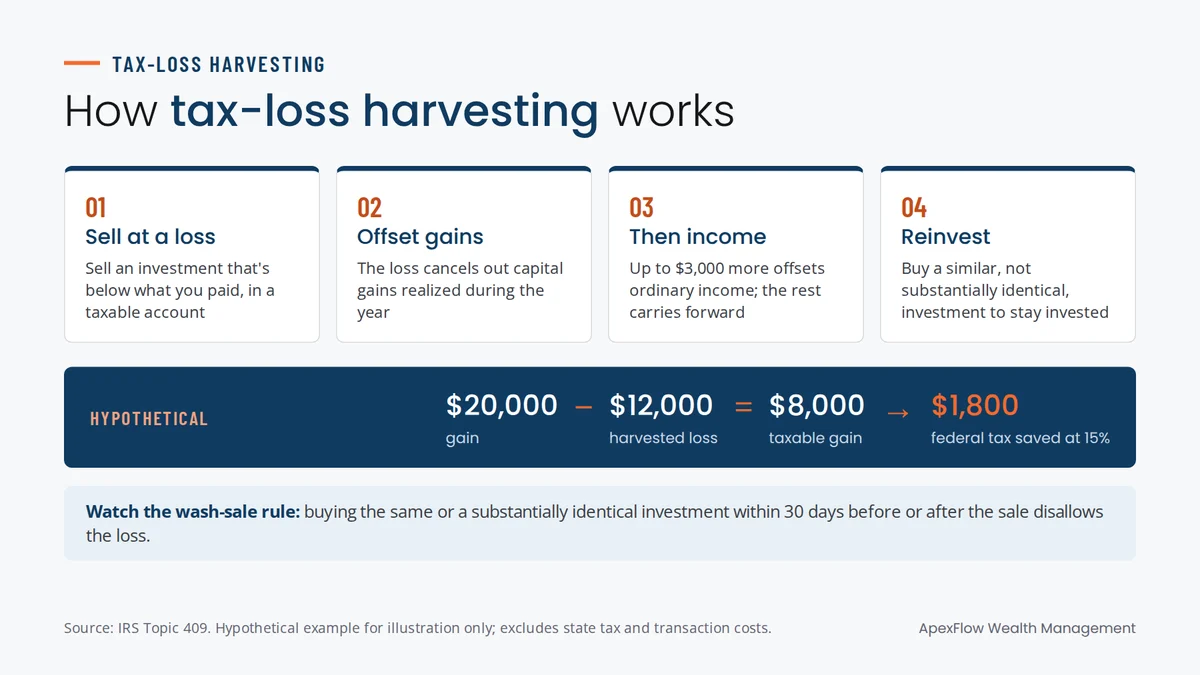
Tax-Loss Harvesting: How It Works and How to Avoid the Wash-Sale Rule
No one likes seeing an investment lose value. But in a taxable account, a loss can have a silver lining. Tax-loss harvesting means selling anRead more -
 October 7, 2026
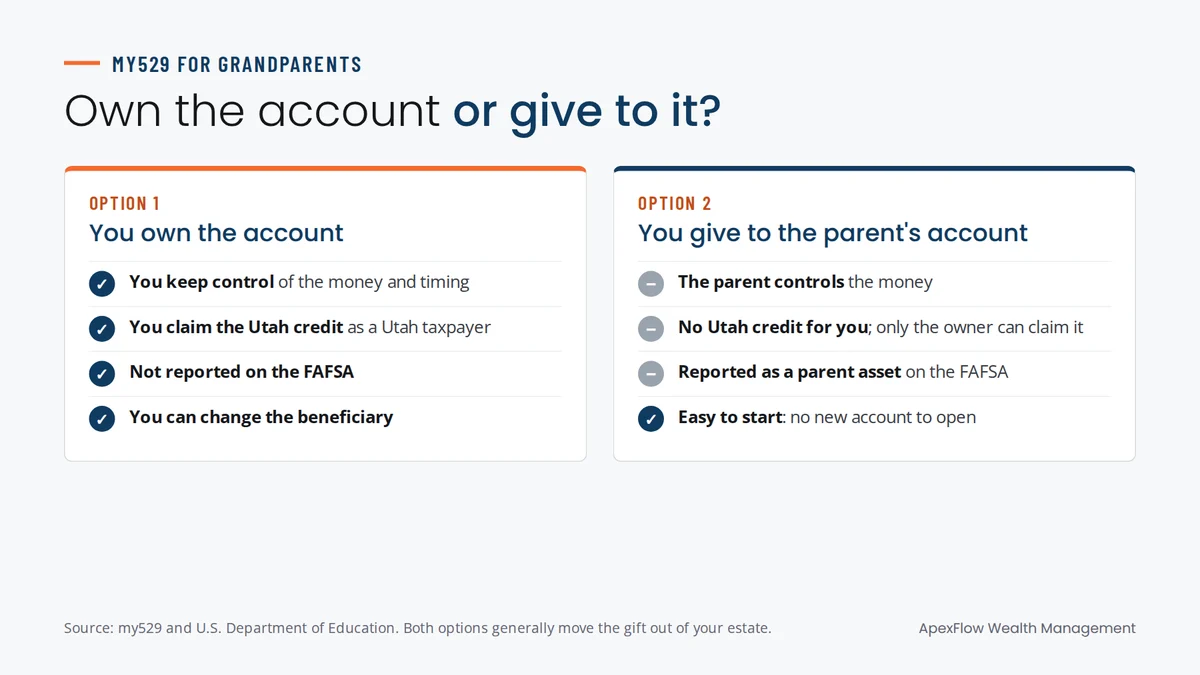
Using Utah’s my529 Plan as a Grandparent
Helping pay for a grandchild’s education is one of the most meaningful gifts a grandparent can give. It’s also one of the most tax-efficient. Utah’sRead more -
 October 7, 2026
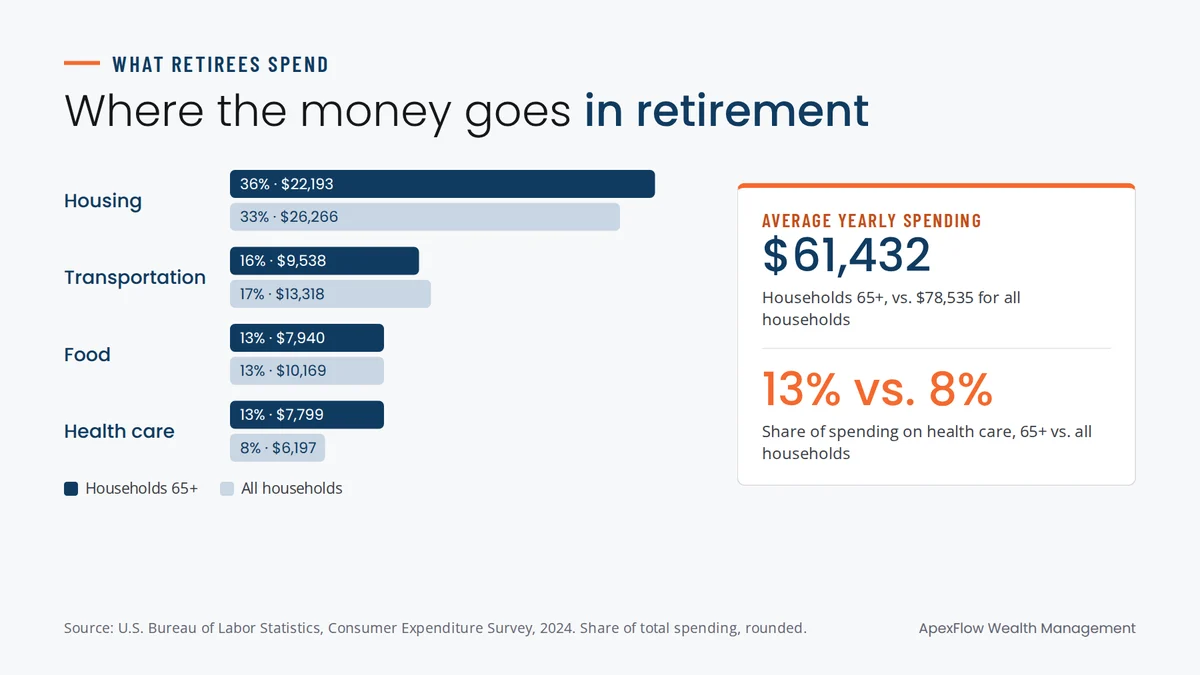
How to Build a Retirement Budget That Lasts
For decades, your budget had a built-in safety net: the next paycheck. Retirement changes that. Your income now comes from Social Security, maybe a pension,Read more