
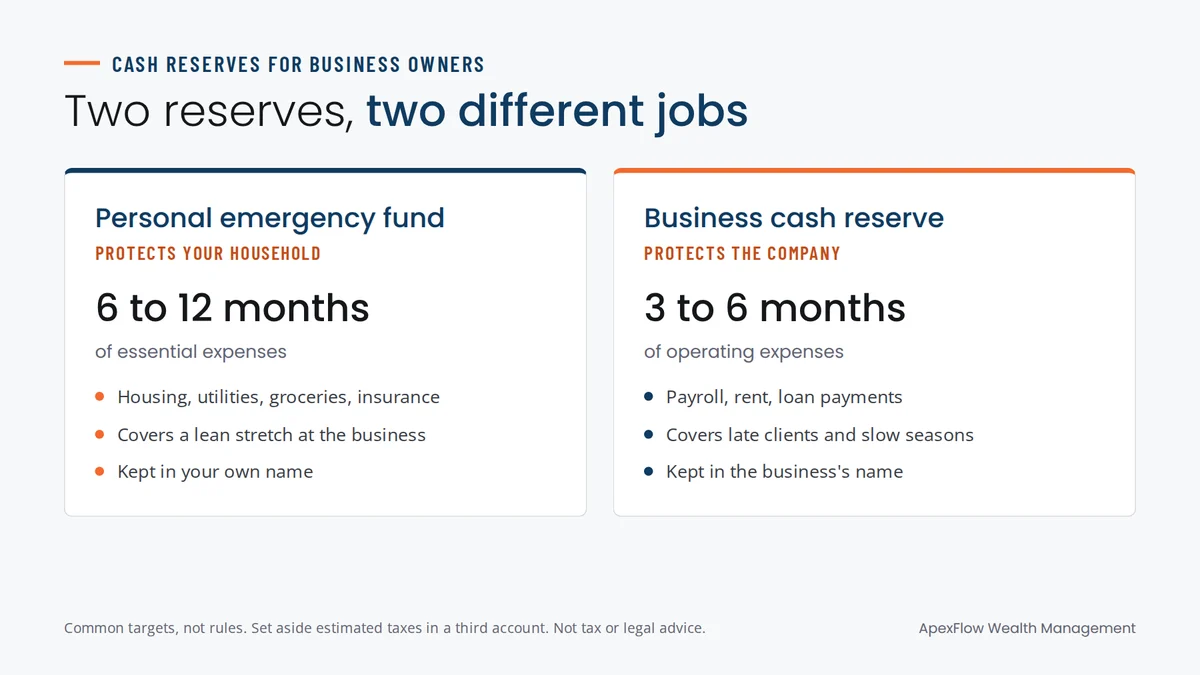
There’s a specific kind of anxiety that comes from not knowing your number. Not your net worth, not your retirement number, just the smaller, more immediate one: how much cash should be sitting in the bank right now, waiting for something to go wrong. For business owners, that question has two answers, because you need two safety nets. Getting cash reserves for business owners right means sizing a personal emergency fund and a business reserve separately, and keeping them apart.

At a glance
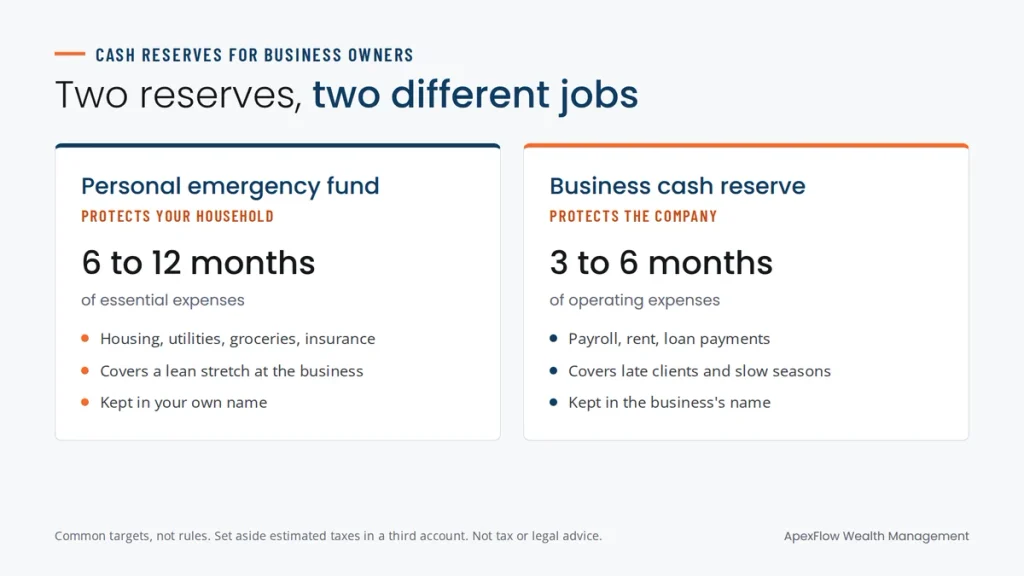
- Keep two reserves with two jobs: a personal emergency fund for your household and an operating reserve for the business.
- Owners with irregular income often need six to 12 months of essential personal expenses. Many businesses aim for three to six months of operating expenses.
- Keep both in safe, accessible places like high-yield savings or money market funds, and set aside taxes separately.
Cash reserves for business owners: why you need two
When your income comes from a business you own, a slow quarter can hit your household and your company at the same time. One pile of cash, shared between them, usually ends up protecting neither.
A personal emergency fund sits between your household and a crisis, so a medical bill, a broken furnace or a lean stretch at the business doesn’t force you into debt or into selling investments at the wrong moment.
A business cash reserve keeps payroll, rent and suppliers paid when revenue dips, a big client pays late or an unexpected repair comes up.
Keeping them separate also keeps your books clean. Mixing personal and business money can complicate bookkeeping and taxes and, in some cases, weaken the liability protection an LLC or corporation is meant to provide. Talk with your attorney and CPA about how your entity should handle it.
How much should your personal emergency fund be?
The old rule of thumb, three to six months of expenses, is a reasonable starting point, but it was never meant to be one-size-fits-all. The right number depends on how predictable your income is and how much room you have if something goes sideways.
| Your situation | A common target for essential expenses |
|---|---|
| Two stable paychecks | About 3 months |
| One income, or nearing retirement | About 6 to 9 months |
| Business owner or self-employed | About 6 to 12 months |
| Business owner whose spouse also works in the business | Toward the higher end, since both incomes share the same risk |
One detail trips people up: build the number from essential expenses, not total spending. Housing, utilities, groceries, insurance, minimum debt payments and transportation count. Vacations, dining out and the subscriptions you keep meaning to cancel don’t. Multiply that monthly figure by your target number of months, and you have a personal number instead of a vague guideline.
There’s also a ceiling. If your personal reserve has crept well past 12 months with no major risk on the horizon, the extra is likely better put to work toward longer-term goals.
How much cash should a business keep in reserve?
Many small businesses aim for three to six months of operating expenses, and more if revenue is seasonal or concentrated in a few large clients. Start with the costs you’d have to pay even in a month with no sales:
- Payroll, including your own salary
- Rent, utilities and insurance
- Loan and lease payments
- Software, subscriptions and other fixed costs
- Estimated taxes coming due
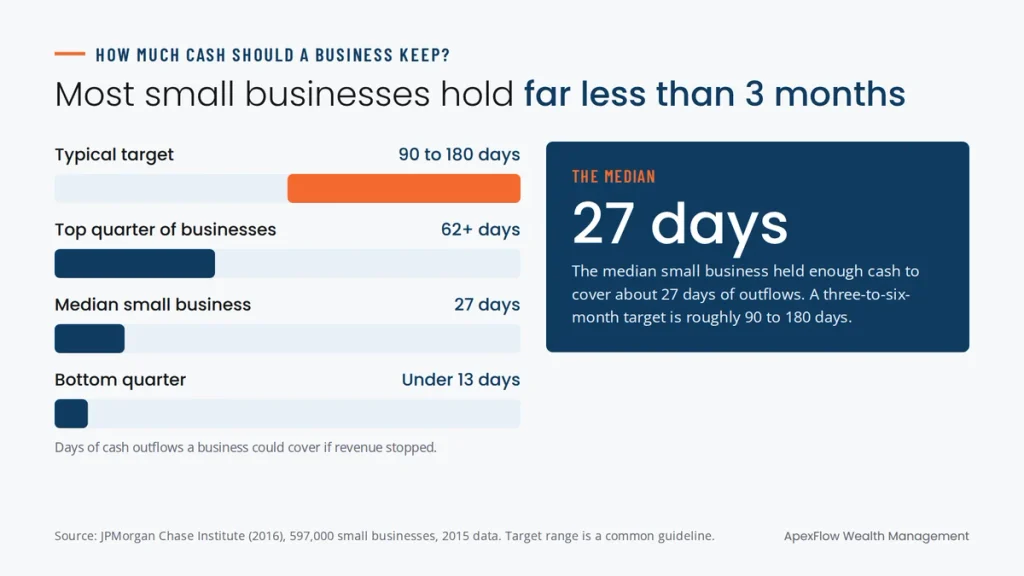
Most businesses hold far less. In a JPMorgan Chase Institute study of nearly 600,000 small businesses, the median business held enough cash to cover just 27 days of outflows, and a quarter held fewer than 13 days. That study used 2015 data, but the point still holds: a thin cushion leaves little room for a slow month.
Set aside taxes separately
Many owners of pass-through businesses pay estimated taxes quarterly. Keeping that money in its own account means a strong quarter doesn’t feel like extra cash, and a tax bill never has to come out of your emergency fund.
Pay yourself a steady amount
Paying yourself a consistent salary or draw, rather than whatever’s left each month, makes your household budget predictable and lets the business reserve absorb the ups and downs instead of your family.
Where to keep your cash reserves
This is where a lot of otherwise disciplined savers quietly cost themselves money. A standard checking account often earns next to nothing while inflation erodes what the money can buy.
- High-yield savings accounts are FDIC insured up to the standard limits, give you access within a day or two and usually pay more than a traditional bank account.
- Money market funds in a brokerage account aren’t bank deposits, so they carry SIPC coverage rather than FDIC insurance, but they’re highly liquid and their yield tends to move with short-term interest rates.
- Short-term Treasury bills can work for the part of a reserve you’re less likely to touch quickly, and their interest is exempt from state income tax.
Mind the FDIC limits. Deposit insurance covers up to $250,000 per depositor, per bank, for each ownership category. Accounts owned by a corporation, partnership or LLC are generally insured separately from the owners’ personal accounts, while a sole proprietor’s business deposits are typically combined with the owner’s individual accounts. You can confirm how your accounts are covered at FDIC.gov. If your balances run higher, spreading cash across banks or using a bank’s sweep program can extend coverage.
What we’d steer you away from: keeping emergency cash in the stock market, in a CD with a steep early withdrawal penalty or in a retirement account. All three trade away the one thing a reserve is for, immediate, penalty-free access.

A line of credit is a backup, not a reserve
A business line of credit or a home equity line can be a useful second layer of protection. The best time to open one is when your business and your credit are healthy, not in the middle of a cash crunch, when lenders are least likely to say yes. But borrowed money has to be paid back, so it works best behind a cash reserve, not instead of one. Your personal credit can matter here too, which we cover in Does Your Credit Score Still Matter in Retirement?
When it’s okay to use your reserve
The hardest part of having an emergency fund isn’t building it. It’s knowing when you’re allowed to touch it without guilt.
The test is whether the expense is unexpected, necessary and can’t be pushed to next month. A key client paying 60 days late, a medical bill, equipment that breaks down, a furnace that dies in January. Those qualify. A holiday sale, a last-minute trip or an upgrade that’s more want than need doesn’t, and pulling from your reserve for them is how a fully funded emergency fund quietly turns into a slush fund with a fancier name.
If you do need to use it, use it. That’s what it’s for. The discipline isn’t in never touching it; it’s in refilling it afterward.

The bigger picture
A well-sized, well-placed cash reserve doesn’t just solve for the emergency itself. It changes how you make every other financial decision, because you’re no longer making choices from a place of fear about what might go wrong next month. For business owners, that confidence shows up everywhere, from negotiating with clients to deciding when to invest in growth.
It’s also the foundation for bigger planning. A business that can weather a bad quarter is easier to keep in the family or sell on your terms, which is why cash reserves are one of the first things we look at in business succession planning. If you have partners, a buy-sell agreement covers the other side of that question. Both fit into the Design stage of our planning process.
Frequently asked questions
Many owners keep two reserves: six to 12 months of essential personal expenses at home, and three to six months of operating expenses in the business. The right amounts depend on how steady your revenue is.
Generally, yes. Separate accounts keep your books clean, make taxes simpler and help preserve the liability protection of an LLC or corporation.
In safe, accessible places like a high-yield business savings account, a money market fund or short-term Treasury bills. Keep an eye on FDIC limits if balances are large.
No. It’s a helpful backup, but it has to be repaid and can be reduced or frozen when the economy turns. It works best alongside cash.
Because self-employed income is less predictable, six to 12 months of essential expenses is a common target, in addition to money set aside for taxes.
Talk it through with us
If you’re not sure whether your personal and business cash are each doing their job, that’s a conversation worth having before you need the answer. Book a 20-minute Fit Call. It’s virtual, no prep is needed and there’s no obligation.
With clarity and confidence,

Investing involves risk and you may incur a profit or loss regardless of strategy selected, including diversification and asset allocation. Raymond James and its advisors do not offer tax or legal advice. You should discuss any tax or legal matters with the appropriate professional.
Related Articles
Dig deeper into our resource library
-
 October 7, 2026
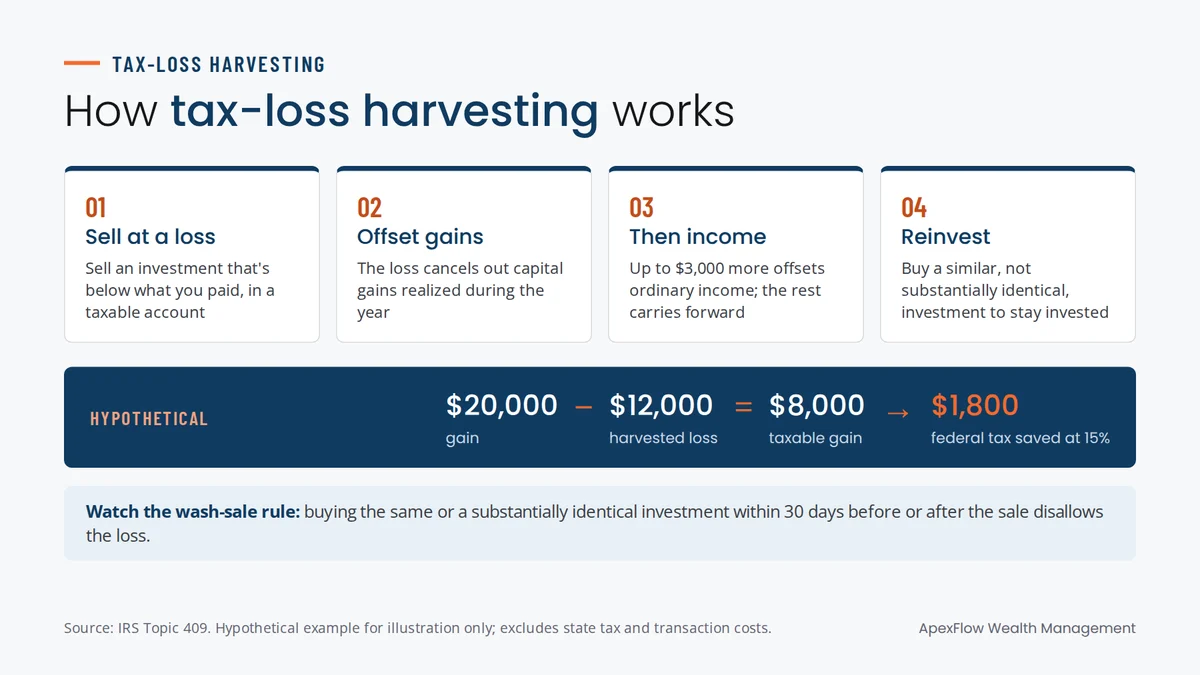
Tax-Loss Harvesting: How It Works and How to Avoid the Wash-Sale Rule
No one likes seeing an investment lose value. But in a taxable account, a loss can have a silver lining. Tax-loss harvesting means selling anRead more -
 October 7, 2026
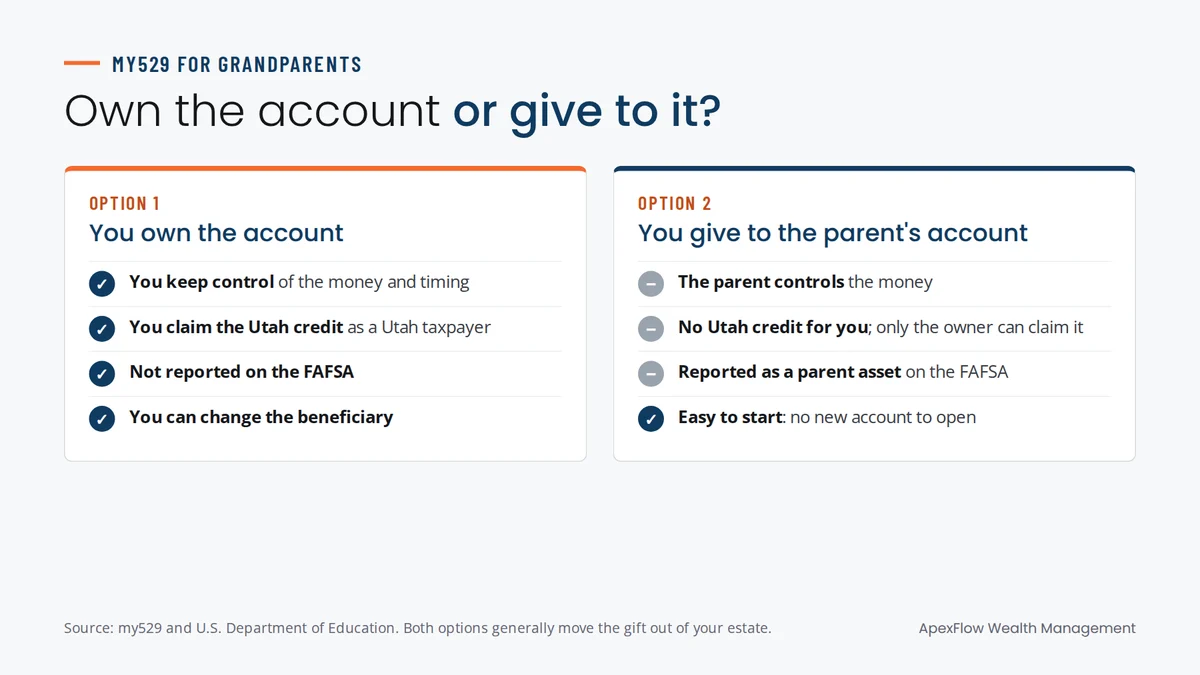
Using Utah’s my529 Plan as a Grandparent
Helping pay for a grandchild’s education is one of the most meaningful gifts a grandparent can give. It’s also one of the most tax-efficient. Utah’sRead more -
 October 7, 2026
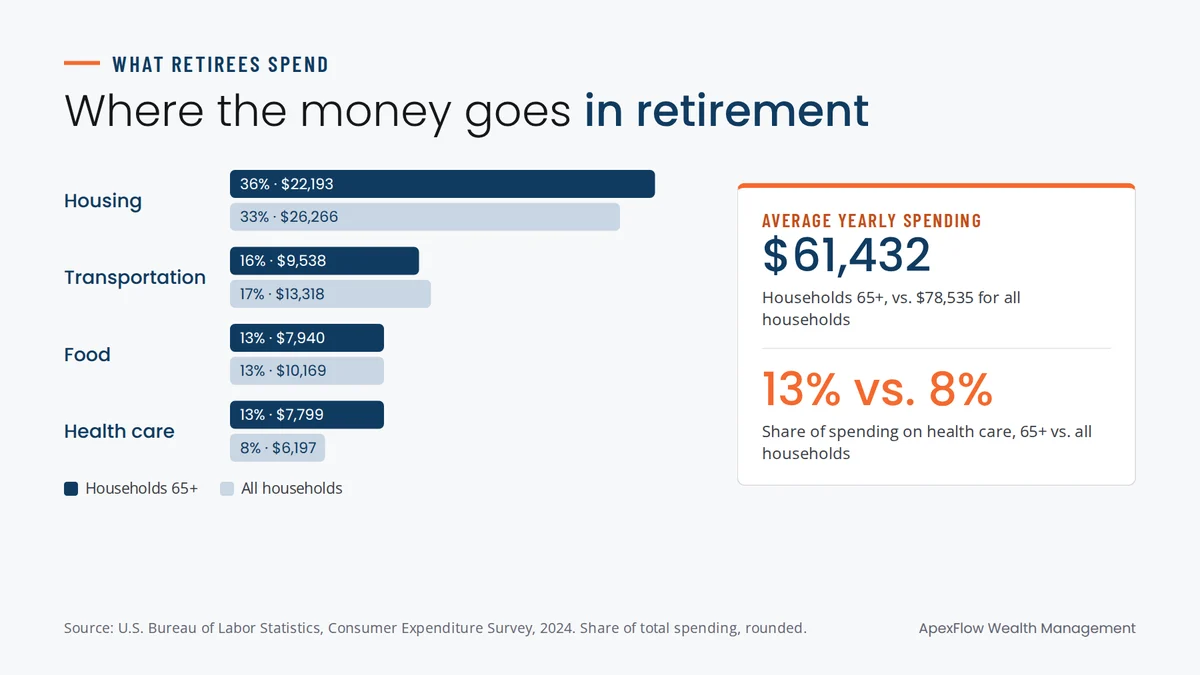
How to Build a Retirement Budget That Lasts
For decades, your budget had a built-in safety net: the next paycheck. Retirement changes that. Your income now comes from Social Security, maybe a pension,Read more